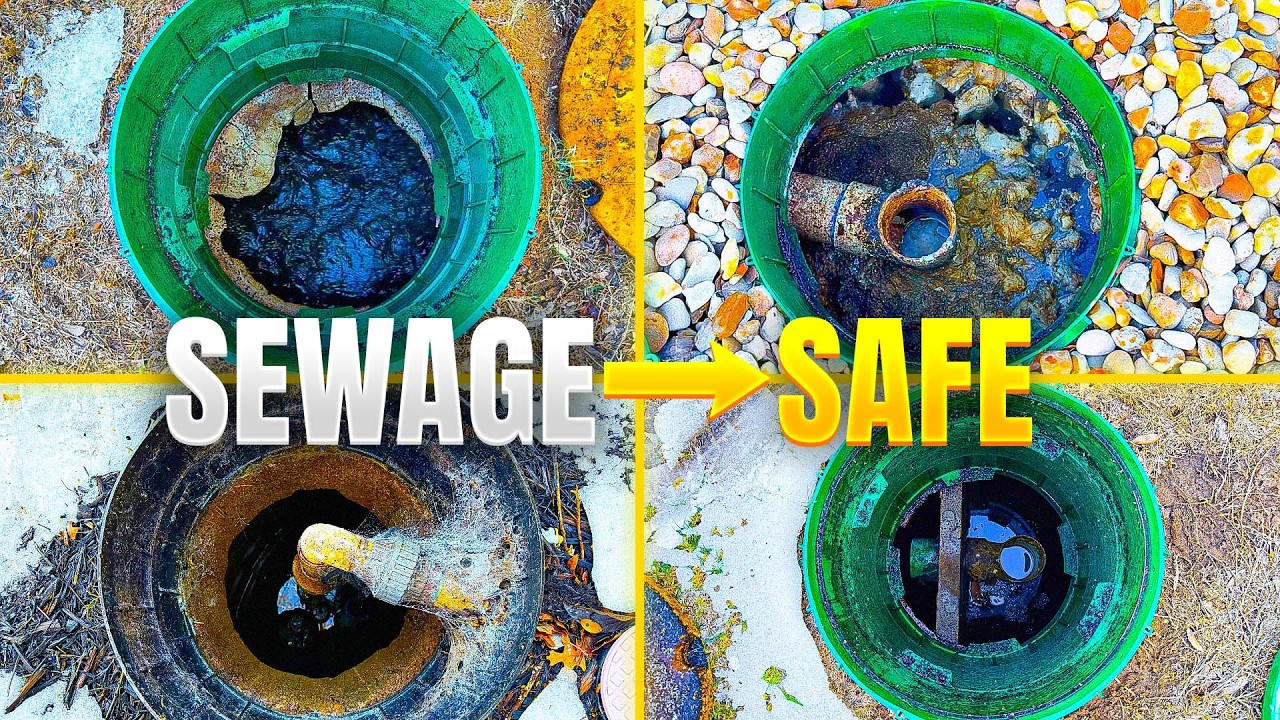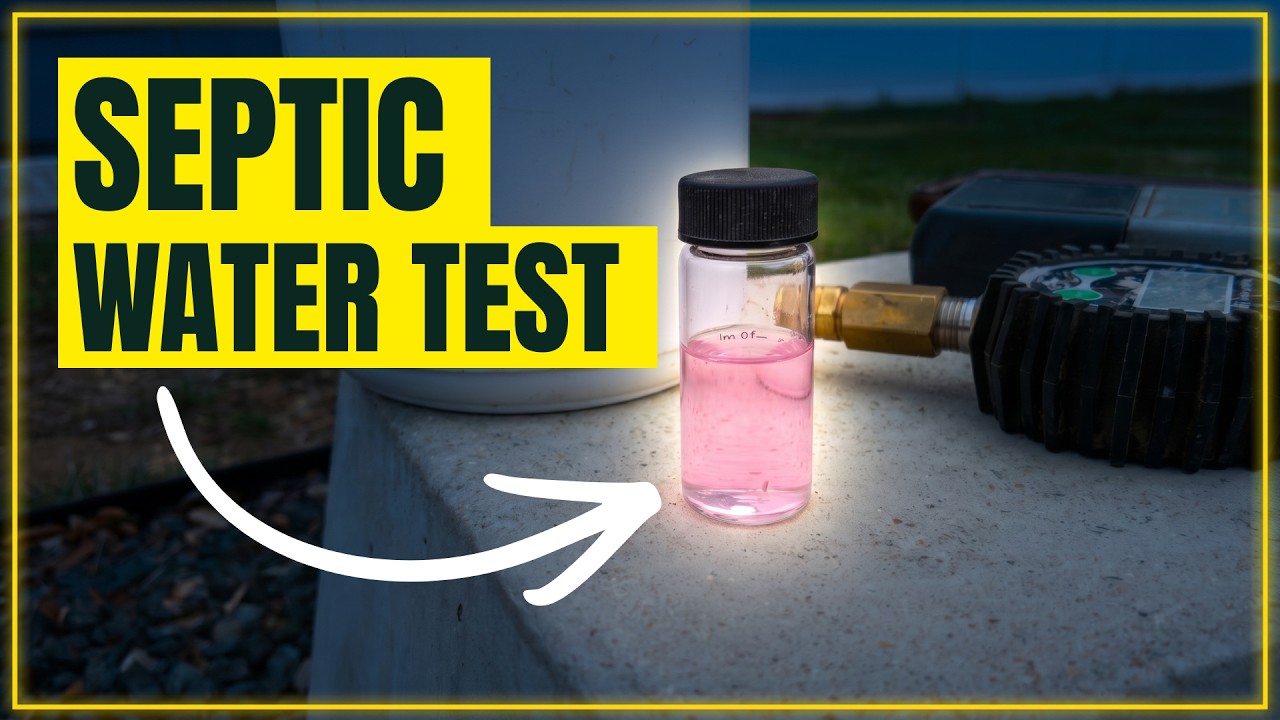

Texas aerobic septic systems: Legal requirements & what you need to know as a homeowner
If you own an aerobic septic system in Texas… In most counties, a maintenance contract with a licensed provider isn’t optional — it’s the law, and the responsibility lands on you, the homeowner. Not your installer. Not the people who sold you the house. You. Below, we’ll walk through exactly what the Texas aerobic septic system requirements are, what a contract includes, what it costs in Central Texas, and how to stay on the right side of the rules.
Quick Summary
- In most Texas counties, an aerobic septic system is legally required to be on an active maintenance contract with a licensed provider (TCEQ rules under Title 30, Chapter 285 of the Texas Administrative Code).
- That contract means 3 inspections a year (one every four months-ish), water-quality testing, mechanical checks, solid samples, and reports filed with your county.
- The legal responsibility sits with the homeowner — so if you buy a home on an aerobic system, getting compliant is on you.
- Skipping it can mean fines that climb into the hundreds of dollars per day.
- Most Central Texas homeowners budget somewhere between $300 and $550 a year to stay covered.
On This Page
- Is a Maintenance Contract Legally Required for a Texas Aerobic Septic System?
- What Is an Aerobic Septic Maintenance Contract — and What's Included?
- What Happens If You Don't Have a Maintenance Contract?
- How Much Does an Aerobic Septic Maintenance Contract Cost in Central Texas?
- What We Include In Our Contracts At Luna:
- Buying or Selling a Home with an Aerobic Septic System in Texas
- Why Does Texas Regulate Aerobic Systems So Heavily?
- Why Does Texas Regulate Aerobic Systems So Heavily?
- Frequently Asked Questions
Is a Maintenance Contract Legally Required for a Texas Aerobic Septic System?
Yes. In most Texas counties, if you own an aerobic septic system, you’re legally required to keep an active maintenance contract with a licensed maintenance provider. Full stop.
This is one of the most common questions we get, and it catches people off guard — even folks who’ve lived in Texas their whole lives. The rule comes from Title 30, Chapter 285 of the Texas Administrative Code, which says that “aerobic on-site sewage facilities” (that’s the legal name for the aerobic septic system sitting in your yard) have to be maintained under an active contract with a provider like us.

☝️The Exception — Maintaining Your Own System
Here’s the part people miss: the responsibility to be on contract is yours. Under the law, the homeowner is the one on the hook for keeping that contract active. So if you move into a home that already has an aerobic system in the ground, and you’re in one of the counties that requires this, it’s up to you to get a contract started if there isn’t one already in place.
There’s one exception worth knowing about, but it’s narrower than most homeowners hope. Two years after an aerobic system is installed, a single-family homeowner is allowed under state rules to maintain the system themselves instead of hiring a licensed provider — and that includes reporting their own maintenance to the county.
Here’s the big catch! A lot of Central Texas counties have adopted stricter rules than the state minimum. Some require homeowners to complete a training course before they can self-maintain, and some prohibit homeowner maintenance entirely. So before you assume you can DIY your way out of a contract, check with your county. And honestly? Most of the homeowners we talk to take one look at the testing and county-reporting requirements and decide it’s not worth the headache.
What Is an Aerobic Septic Maintenance Contract — and What’s Included?
A maintenance contract is a legally binding agreement between you and a licensed provider to keep your system inspected, tested, and reported to the county. At a minimum, it covers three inspections a year — one roughly every four months.
Think of it like the state vehicle inspection a lot of us are used to. Somebody qualified comes out, checks every component, makes sure everything’s operating inside the legal limits, and files the paperwork that proves it. During each visit on an aerobic system, that means checking the mechanical and electrical parts — the air compressor, the pump, the control panel — testing the water quality and chlorine residual, looking at the spray heads, and noting whether every component is doing its job. Then they file a report with your county’s permitting authority, generally within 14 days of the visit.
A standard Texas aerobic maintenance contract should include four things:
- The inspections themselves — three times a year for most systems, one every four months.
- Official reporting to the county — the documentation that proves your system is in compliance, submitted to your county.
- A maintenance record kept on file — so you, the homeowner, can pull up your system’s history any time.
- Notifications to you — a heads-up any time something needs to be replaced, repaired, or adjusted.
The state also sets a few baseline rules for what the contract paperwork has to spell out: who’s covered, the maintenance and reporting schedule, who’s responsible for what, and the provider’s license and contact info. On top of that, your system is supposed to carry a weather-resistant tag showing the provider’s name, phone number, and service history — so anyone who opens it up can see it’s being looked after.

What Happens If You Don’t Have a Maintenance Contract?
If you’re out of compliance, you’re exposed to county fines that can climb into the hundreds of dollars per day, plus required repairs or upgrades — and here’s the kicker: the county usually figures it out without you ever calling them.
We get calls all the time from new customers who just got a scary letter in the mail and had no idea they were even required to be on a contract. So how does the county know? A few ways:
- Missed inspection reports. Because providers are legally required to file every inspection report with the county, your county has a record of every report that’s ever been submitted on your address. That means it’s easy for them to see when your last report was three years ago — or never.
- Lapsed contracts. This is one of the most common reasons people get caught, and it’s almost never on purpose. Some contracts aren’t subscriptions, so it’s on the homeowner to renew them. And let’s be honest — the last thing on anyone’s mind during a busy week is their septic tank. The contract quietly lapses, and the fines start.
- Property sales. When a home changes hands, the new owner often has no clue the system needs a contract at all, and it slips through the cracks until a letter shows up demanding payment for being out of compliance.
Need pricing on a maintenance contract? Call us here
Pro Tip
The lapse trap is the one we see bite good homeowners the most. If your contract isn’t on auto-renewal, set a phone reminder on a date you’ll actually see it — the same day you pay a recurring bill works great. At Luna, we offer both automatic renewal and non-subscription plans, and for our non-subscription customers we start sending renewal notices 45 days out so this never happens to them. A lapse you didn’t even notice is a frustrating thing to get fined for.
How Much Does an Aerobic Septic Maintenance Contract Cost in Central Texas?
Most Central Texas homeowners pay somewhere between $300 and $550 a year for an aerobic septic maintenance contract, depending on the system and the county.
Our team pulled data from across the Central Texas region to give you some realistic averages:
- Basic / standard contracts: roughly $250–$390 per year, covering the three inspections and the county reporting.
- Mid-range contracts: roughly $300–$500 per year, adding small extras like a free service call.
- Premium contracts: roughly $500–$700 per year, adding things like priority service, chlorine, and additional coverage.
Where you land depends mostly on your system type, and your county’s requirements. But for most homeowners, budgeting in that $300–$550 range is a safe bet.
What We Include In Our Contracts At Luna:
When you’re shopping for a contract, make sure it covers the four basics — inspections, county reporting, records on file, and notifications when something’s wrong. Beyond that, here’s how we structure things at Luna so you can see what “good” looks like.
We offer two contract tiers.
👉 Luna Basic:
- 3 inspections a year
- A full diagnostic of every component every single visit
- Complete photo and video documentation
- All the county reporting done on your behalf
- Discounted service fees on anything outside the inspections
- 10% off any parts we have to replace
- And a military discount for our veterans
👉 Luna Premiere layers one more thing on top: we waive one service-call fee per year. For a lot of our Premiere customers, that single waived visit pays for the upgrade by itself.
Check out one of our example inspection reports below. This is just 1 of several diagnostics we give our customers to keep them in the loop and informed! 👇

A QUICK NOTE ON SYSTEM TYPES:
We primarily separate aerobic septic systems into 2 categories:
- Basic – Above ground air compressor
- Advanced – Aerator exists inside the aeration tank. Systems with aerators inside the tank require a more specialized technician to service the system. These systems have more components, and are by design more complex.
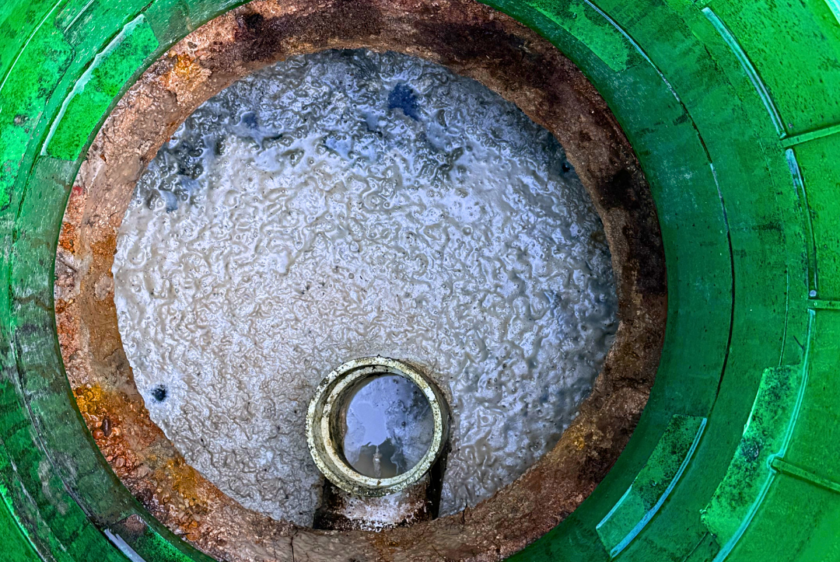
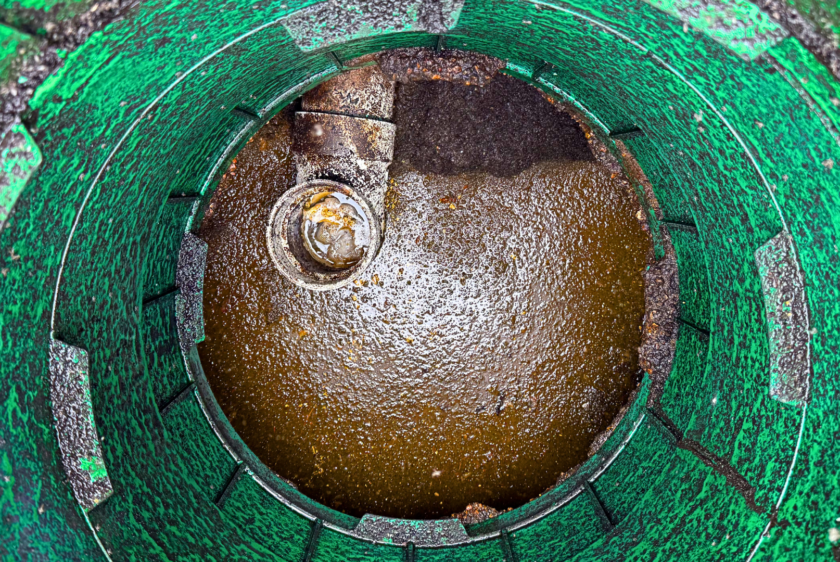
The part we’re proudest of is the documentation. Every time one of our techs is on location, they’re photographing every test, every fix, and every issue they find — so we build a full historical record of your system. When we roll up, we already know what’s been going on under your lawn. That’s how we catch the small stuff before it becomes the big stuff.
Here are some photo documentation examples below:



Buying or Selling a Home with an Aerobic Septic System in Texas
If you’re buying a home with an aerobic septic system, the maintenance obligation becomes yours at closing — so don’t assume the seller’s contract just carries over to you. Most Central Texas counties expect a new owner to get a compliant contract in place quickly, often within about 30 days.
The cleanest move is to treat the system like part of your due diligence. Before closing, request the OSSF permit records and the maintenance history from the county or the seller — that paperwork tells you whether the system is permitted, what shape it’s in, and whether it’s been kept up. Once you own the home, notify your local permitting authority that you’re the new owner and get your own contract started.
An important note for buyers and sellers: If you’re selling, you’re responsible for disclosing a known malfunctioning system, and most counties require a pre-sale inspection (that means the whole thing has to be pumped out to be inspected for cracks and damage).
Why Does Texas Regulate Aerobic Systems So Heavily?
Aerobic systems are everywhere in Central Texas because our thin, rocky Hill Country soil can’t filter wastewater the way more fertile soil can — and because these systems treat and then spray wastewater above ground, Texas treats them more like a small wastewater plant than a “set it and forget it” tank.
It’s no secret our soil out here is mostly limestone and rock. A conventional system relies on deep, absorbent soil to filter treated water as it drips into the ground, and that just doesn’t work where the soil is shallow. Back in 1997, Texas raised the bar on wastewater treatment standards, and conventional systems largely fell out of favor for new builds.
Aerobic systems met the new standard, they fit on the smaller lots that developers were building, and they were quick to design and install. That’s why roughly one in three Texas homes runs on one of these rather than city sewer — and in the Hill Country and the outskirts of Austin and San Antonio, that number’s even higher. Once these systems became the norm, the regulation followed.
Why Does Texas Regulate Aerobic Systems So Heavily?
❌ “If my system is working fine, I don’t need a contract.” Even a perfectly functioning aerobic system is legally required to be inspected and documented. Working order doesn’t exempt you.
❌ “No alarm means no problem.” Plenty of compliance issues develop quietly long before an alarm ever trips. By the time the light comes on, you may already be behind.
❌ “My installer handled all of that.” Installers don’t manage ongoing compliance. The legal responsibility falls on you, the homeowner — from day one.
❌ “I’ll just call someone if it breaks.” Waiting for a failure usually means fines, emergency repair costs, and downtime — far more than a routine contract would have cost you.
❌ “Pumping the tank counts as maintenance.” Pumping and inspections are separate requirements. One does not replace the other.
❌ “I can pause maintenance if nobody’s living in the house.” The system is regulated whether the home is occupied or not. An empty house doesn’t pause the rules.
Frequently Asked Questions
Is a septic maintenance contract really required in Texas?
Yes — in most counties, aerobic septic systems are legally required to be on an active maintenance contract with a licensed provider under TCEQ rules (30 TAC Chapter 285). The responsibility to keep it active is the homeowner’s, not the installer’s or the previous owner’s.
How often does my aerobic system have to be inspected?
Every four months — three times a year, for as long as the system operates. The only common exception is systems with electronic monitoring, which can drop to once every six months. Most residential systems don’t have that setup, so plan on three visits a year.
What happens if my contract lapses?
You’re out of compliance the moment it lapses, and the county can fine you — potentially hundreds of dollars per day. This happens most often with non-subscription contracts that homeowners simply forget to renew, which is exactly why we send renewal notices 45 days out.
I just bought a house with an aerobic system — what do I do?
Get your own maintenance contract in place quickly (many Central Texas counties expect it within about 30 days of closing) and notify your county that you’re the new owner. Don’t assume the seller’s contract automatically carries over to you — the obligation is now yours.
Can I maintain my own aerobic system to save money?
Sometimes. State rules allow single-family homeowners to self-maintain starting two years after installation — but many Central Texas counties require a training course first, and some don’t allow it at all. Check with your county. Between the testing and the county reporting, most homeowners decide it’s not worth the hassle.