
What Is an Aerobic Septic System? What You Must Know In Central Texas!
An aerobic septic system is a small wastewater treatment plant that lives in your yard and cleans everything that leaves your house by pumping in oxygen. That oxygen grows bacteria, and those bacteria do the actual cleaning before the water gets sent back out into your yard. Nasty right? If you own a home here in Central Texas, there’s a good chance this is exactly what you’ve got in the ground, so here’s everything you need to know.
Quick Summary
- An aerobic septic system is an on-site sewage facility (OSSF) — basically a residential wastewater treatment plant for a single home.
- We call it “aerobic” because it pumps air into one of its chambers so oxygen-loving bacteria can grow and break down the waste. That’s the whole trick. Nature at it’s finest.
- Most aerobic systems here in Central Texas are built as four connected chambers, and the waste water gets a little cleaner as it moves from one to the next until it’s treated and ready to be sprayed or dripped back out into your yard.
- Newer Central Texas homes tend to run aerobic systems because our rocky, limestone-heavy ground doesn’t filter waste water the way soil does in other parts of the country. So these aerobic systems are our best solution.
On This Page
- What Is an Aerobic Septic System, Exactly?
- Aerobic vs. Conventional Septic System: What's the Difference?
- Why Do So Many Central Texas Homes Have Aerobic Systems?
- How Does an Aerobic Septic System Work? The Four Chambers
- Basic vs. Advanced Aerobic Systems: Air Compressor or Aerator?
- How Does the Treated Water Leave Your System? Sprinkler vs. Drip
- Is Aerobic Septic Maintenance Required in Texas?
- Do You Still Have to Pump Out an Aerobic Septic System?
- Frequently Asked Questions
What Is an Aerobic Septic System, Exactly?
An aerobic septic system is a residential wastewater treatment plant that sits underground on your property and treats everything that goes down your drains before releasing it back into your yard. In Texas, you’ll often hear it called by its more official name: an OSSF, or on-site sewage facility, and here’s why — it’s a sewage facility, on your site, treating your home’s waste water and nobody else’s.
The word that matters most here is “aerobic.” It means air. We’re actively pumping oxygen into the “aeration chamber” so that aerobic bacteria — the kind that need oxygen to live — can grow, multiply, and feed on the waste. Those bacteria are the real workhorses. They break the waste down naturally and clean the water far more efficiently than it would get cleaned just sitting in a tank.
That’s the fundamental difference between an aerobic system and a conventional system. Everything else — the tanks, the pipes, the pumps, the sprinklers — is just there to support that one process: getting oxygen in so the bacteria can do their job.
Aerobic vs. Conventional Septic System: What’s the Difference?
The difference between an aerobic and a conventional septic system comes down to one thing: air. An aerobic system pumps oxygen in to grow bacteria that treat the water. A conventional system doesn’t — it’s essentially a big concrete box in the ground where waste collects, and the soil does the filtering after the water drips out.
In a conventional setup, the waste water sits in the tank, separates out, and eventually flows into what’s called a leach field — a network of underground pipes that slowly release the water into the ground. From there, the soil itself is the filter and the final treatment step. No air pump, no bacteria colony we’re actively feeding. It works, but it leans entirely on having the right kind of dirt underneath it.
Pro Tip
Here’s a quick rule of thumb we give homeowners: if you’ve got a really old home on a really old property, there’s a decent chance you’re on a conventional system. Newer homes and newer developments in Central Texas are almost always aerobic. Which leads to the obvious question — why?
Why Do So Many Central Texas Homes Have Aerobic Systems?
Central Texas homes use aerobic septic systems because our ground is rocky and full of limestone, which makes conventional soil-based filtering unreliable. When you can’t count on the soil to do the cleaning, you have to build a system that treats the water itself before it ever hits the ground.
Think about it from the soil’s perspective. In places like the southeast United States, there’s an abundance of deep, fertile, absorbent soil that does a fantastic job filtering waste water underground. That’s why conventional systems are so common there. Out here, we’re dealing with limestone and rock not far under the surface. The ground just isn’t as absorbent, so relying on it as your filtration and sanitation step just doesn’t work.
So instead, we treat the water aerobically inside the system, then spray or drip it out — often letting the Texas sun evaporate it — rather than asking the soil to do the heavy lifting. It’s a regional answer to a regional problem, and it’s why aerobic systems are the norm across so much of Central Texas and the Hill Country.
Need pricing on a maintenance contract? Call us here
How Does an Aerobic Septic System Work? The Four Chambers
An aerobic septic system works by moving waste water through four connected chambers, cleaning it a little more at each stop. It starts as raw sewage in the first chamber and comes out the other end as treated water that’s ready to be distributed back into your yard. Most aerobic systems in Central Texas follow this same four-chamber layout, so once you understand it, you understand the majority of what’s in the ground out here.
Let’s walk through them in order.
Chamber 1: The Primary Tank (a.k.a. the Trash Tank)
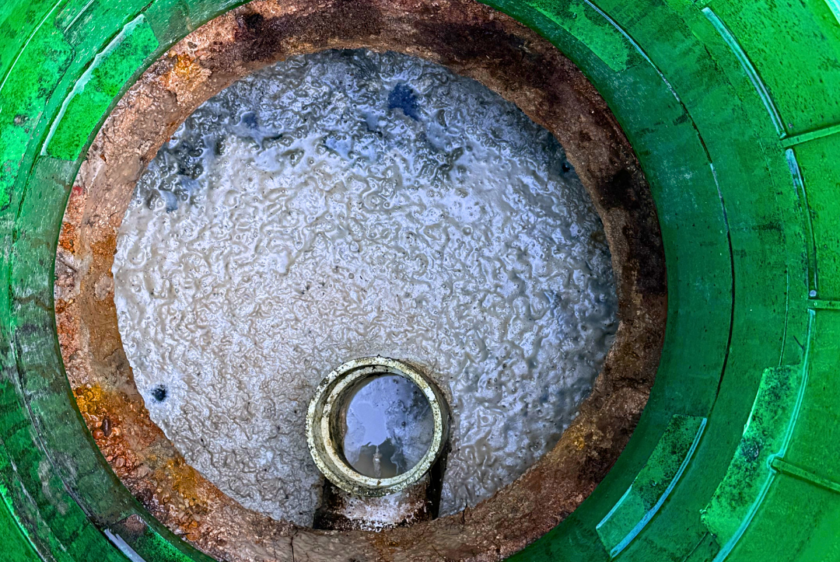
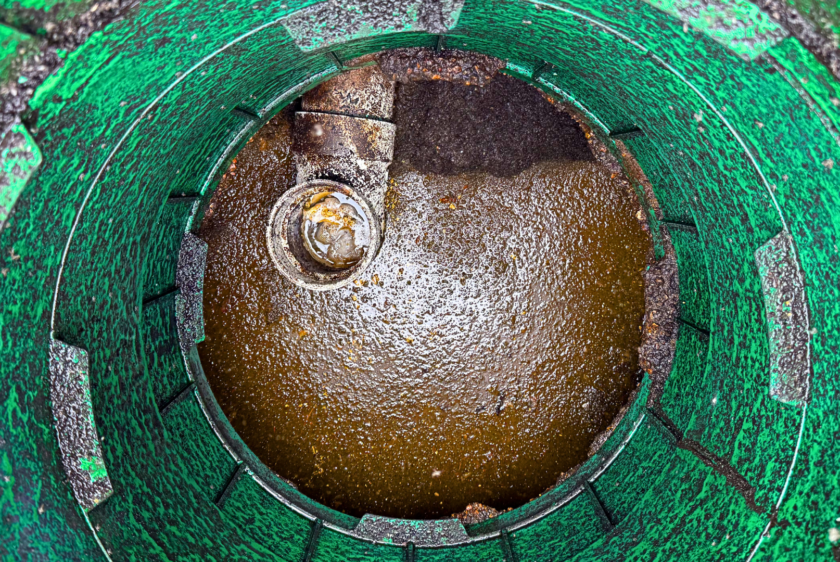
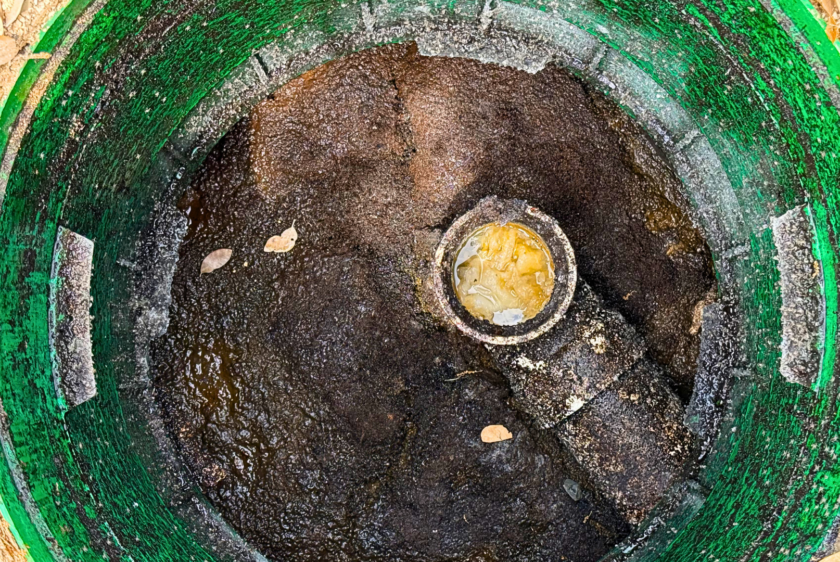
The primary tank is the first chamber, and it catches everything that leaves your house. Toilets, showers, sinks, laundry, garbage disposal — it all lands here first. That’s why a lot of technicians just call it the trash tank.
The main job of this tank is separation. When waste water flows in, it naturally splits into three layers. On top you get the scum layer — the stuff that floats, like oils, fats, grease, and soaps. At the bottom you get the sludge layer, where the heavier solids settle. And in the middle, suspended between the two, is the liquid layer we call effluent. That middle liquid layer is the only part we want moving forward to the next chamber.
There are two pieces of plumbing in here worth knowing about. At the inlet where waste comes in from the house, there’s a T-shaped pipe called a sanitary tee. It’s shaped that way so things can breathe — kind of like the venting in any plumbing system — which keeps waste from clogging up and backing up into your home. Then there’s a baffle between this tank and the next one. The baffle is also T-shaped and sits so that only the middle liquid effluent spills over into the next chamber, leaving the floating scum and the settled sludge behind to keep breaking down.
By the way, that sanitary tee can get clogged over time, and a clog there can cause a backup even when nothing is actually wrong with the system itself. It’s one of the things we clean at every maintenance inspection so our customers don’t get surprised by a backup that was never really a “system problem” at all.
Chamber 2: The Aeration Chamber (Where the Air Comes In)
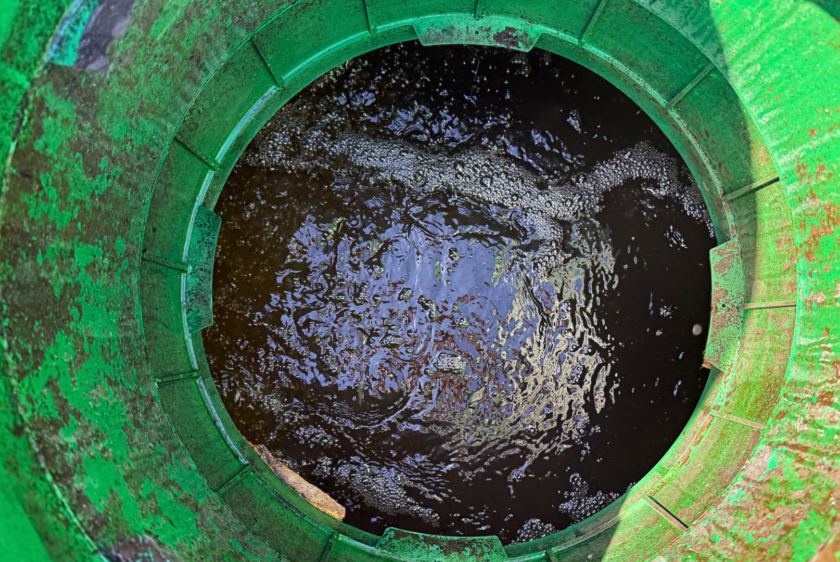
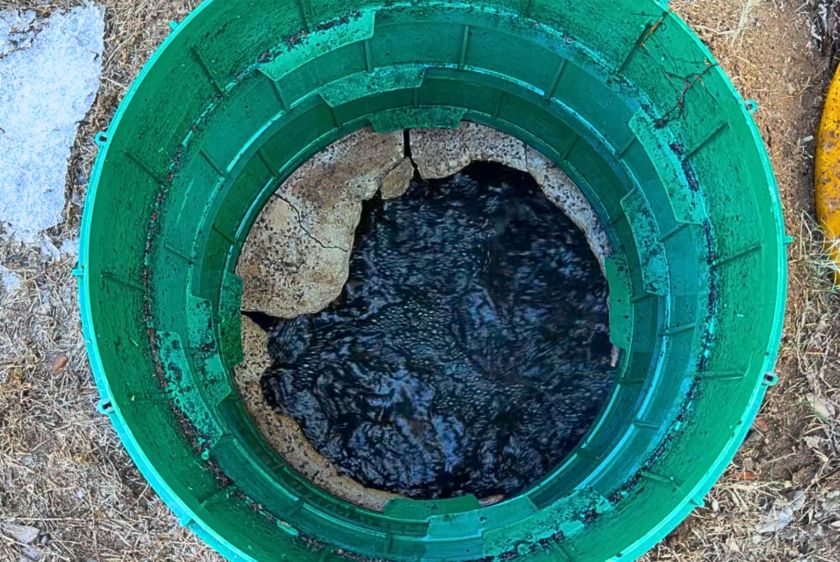
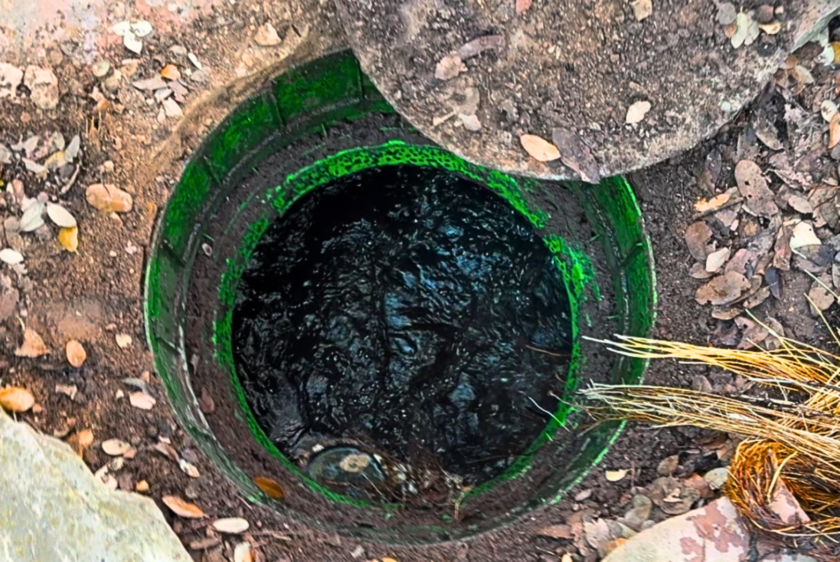
The aeration chamber is where your system gets the name “aerobic.” This is the chamber where we pump air in, and it’s the heart of the whole treatment process.
If you unscrew the lid to this chamber, you’ll see moving, churning water — it looks like a jacuzzi with the jets turned on. There’s a current running through it because air is being pumped in through diffusers near the bottom of the tank. Those diffusers use a porous stone that lets the air out in a steady stream of bubbles.
I asked one of our technicians this exact question: “Do we pump the air in because churning the water up helps break down the solids?” And he told me — not really. That’s not the point. The reason we pump oxygen in isn’t the physical stirring. It’s that oxygen creates an environment where aerobic bacteria can move in, feed on the waste, and break it down naturally. The bubbles are just a side effect of getting that oxygen into the water. As one of our techs likes to put it: there’s no better filter than mother nature, and that’s exactly what we’re building in here.
There’s also a nice bonus. Pumping oxygen into the system dampens odor over time. So when a homeowner calls us about septic smells in the yard, one of the first things we suspect is that the air source has stopped working and the system isn’t being aerated anymore.
That air source comes in one of two forms, and which one you have determines whether your system is “basic” or “advanced” — more on that in a minute.
Chamber 3: The Clarifier
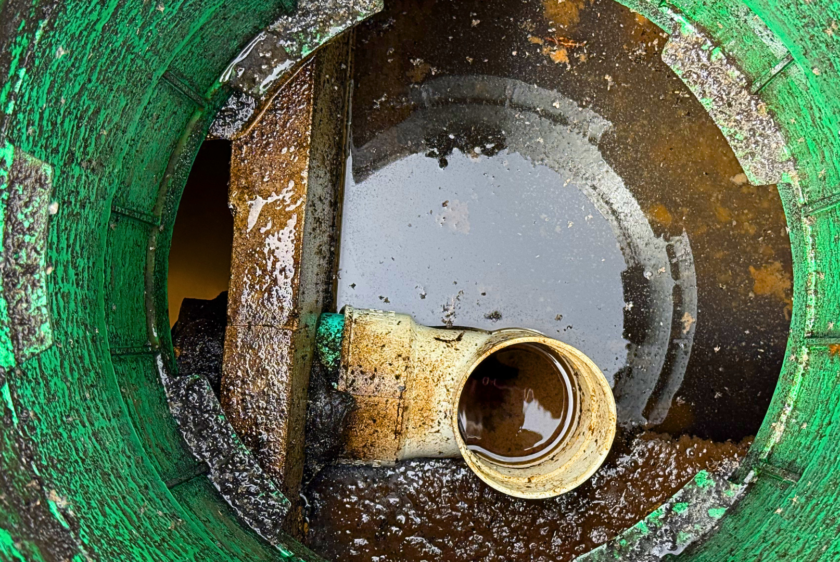
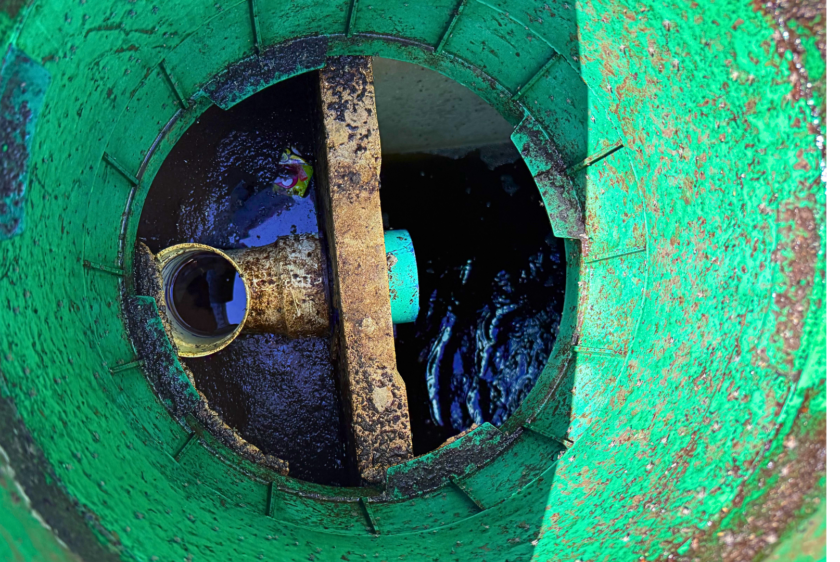
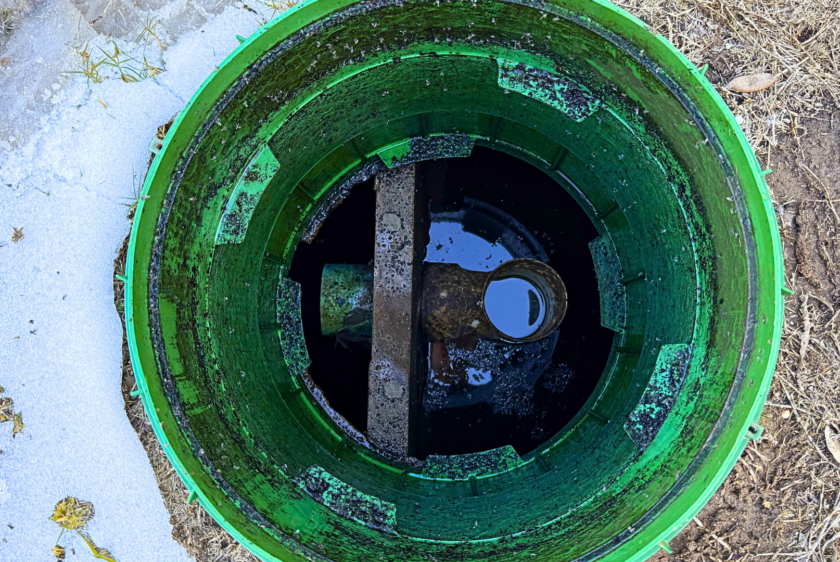
The clarifier’s job is to give any leftover solids one last chance to settle out before the water moves on. If you open the lid here, you won’t see churning water like in the aeration chamber — you’ll just see still water.
The clever part is the design. The wall between the aeration chamber and the clarifier doesn’t go all the way to the floor. There’s an opening at the bottom, so water flows underneath it into the clarifier naturally — it doesn’t have to be piped in or rise to a certain level. And the floor of the clarifier is sloped. So any solids that sneak through and haven’t fully broken down yet hit that sloped floor and slide right back into the aeration chamber to keep getting worked on.
That creates a nice little cycle. Solids keep getting pushed back to where the bacteria are, the bacteria keep multiplying and feeding, and the whole thing gets more efficient the longer it runs. In the industry this broken-down, bacteria-rich material is called activated sludge, and that self-feeding loop is a big part of what makes aerobic systems so good at cleaning water. The end result: only clean liquid moves from the clarifier into the final chamber.
Chamber 4: The Pump Tank
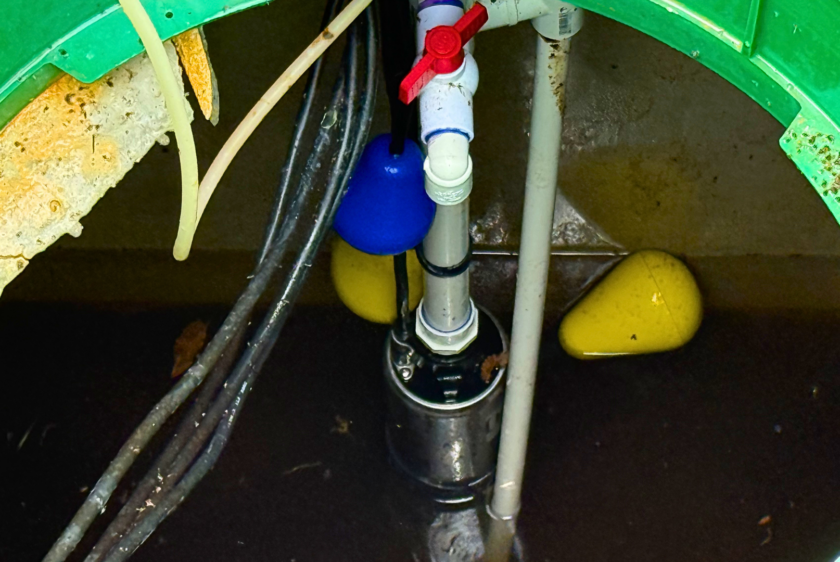
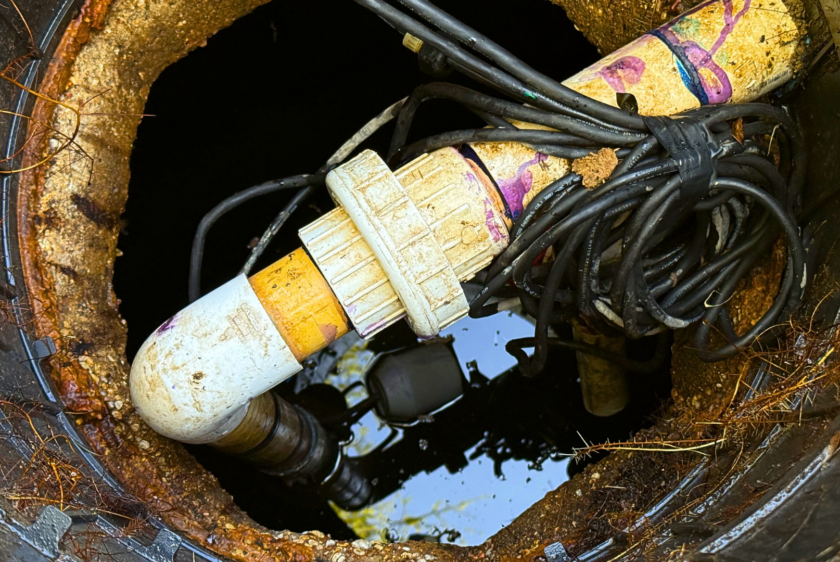
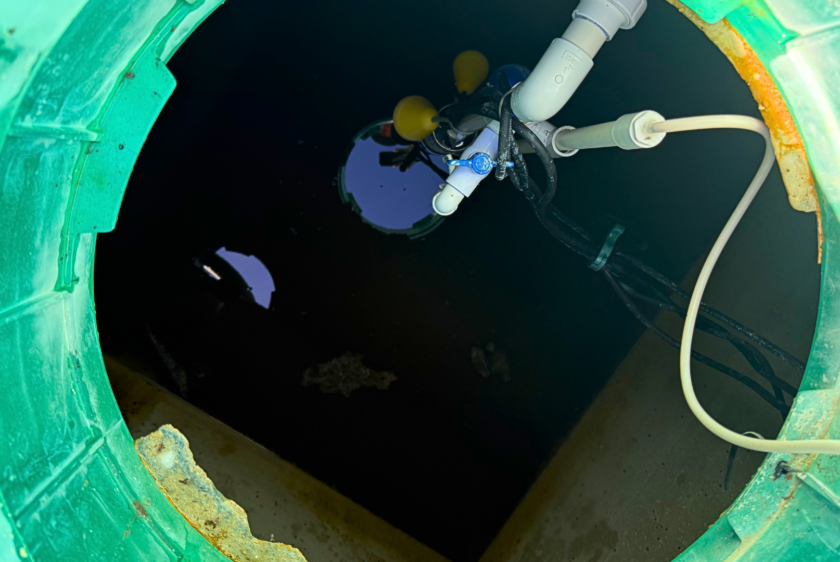
The pump tank is the last stop. By the time water reaches here, it should be fully treated liquid with essentially no solids left — the cleanest water in the entire system, ready to be sent back out into your yard.
Inside sits a pump, and wrapped around it are a few pump floats stacked on top of each other. As the water level rises, the floats rise with it. When the water gets high enough, the first float triggers the pump to kick on and push the treated water out to your distribution system. As the pump empties the tank and the water drops, the floats drop too, and the pump shuts off.
There’s a safety layer built in as well. If the first floats ever malfunction and the pump doesn’t turn on, a top float is there to catch the rising water and sound the alarm. That’s the red high-water alarm on your control panel — and when it goes off, it usually means our techs need to come figure out why the pump isn’t clearing the tank like it should.
Basic vs. Advanced Aerobic Systems: Air Compressor or Aerator?
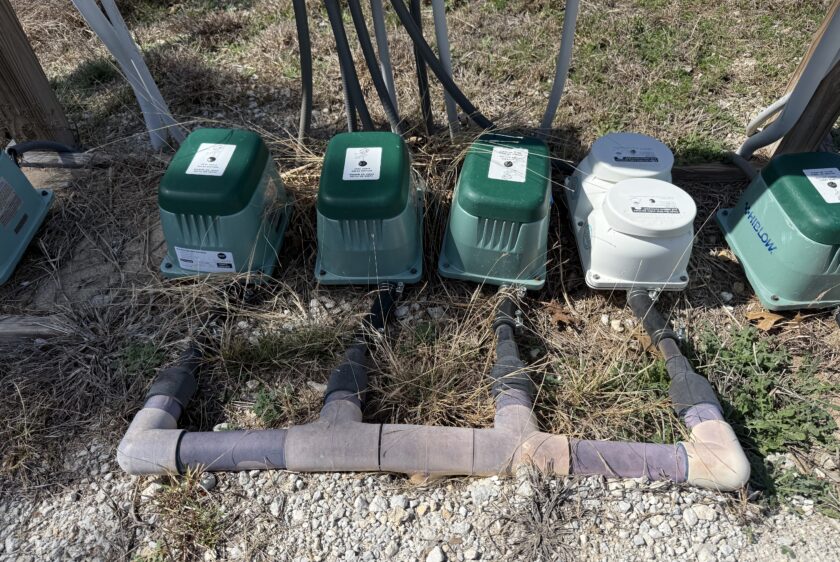
Aerobic systems fall into two broad categories based on how they get oxygen into the aeration chamber: a basic system uses an air compressor that sits outside the tank, and an advanced system uses an aerator that sits inside the tank. Neither one is “better” across the board, but they do come with different maintenance realities, so it’s genuinely useful to know which one you have.
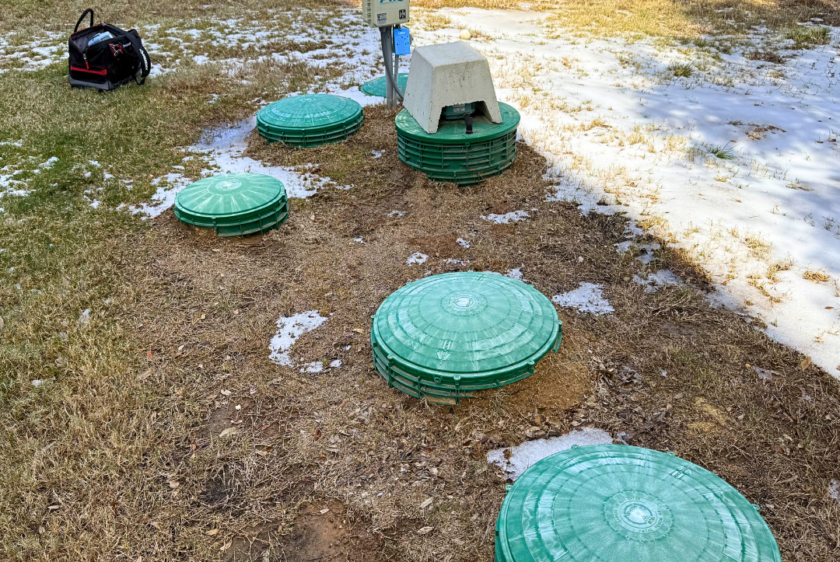
With a basic system, the air compressor lives outside the tank, usually protected from the elements by a small concrete cover you’ll sometimes hear called a “doghouse.” If you can spot that concrete doghouse near your green lids, that’s a strong sign you’ve got an air compressor and a basic system. Basic systems tend to be a little more approachable to service.
With an advanced system, there’s no external compressor. Instead, an aerator sits down inside the aeration chamber itself and pumps air in from there. We call these advanced because they tend to need more maintenance and a bit more specialized know-how. The aerator is a different machine than a compressor, it lives inside the tank, it’s a little easier to break, and you can’t do much with it without opening the system and pulling it out. Different setup, same fundamental job — get oxygen to the bacteria.
How Does the Treated Water Leave Your System? Sprinkler vs. Drip
Once the water is treated, it leaves your system one of two ways: a surface application (sprinkler) system sprays it out above ground, or a drip system releases it underground through a network of small pipes. And which one you have has an impact on what your system needs from you.
A surface application system uses sprinkler heads to spray the treated water out onto the surface of your yard. A drip system runs the water through small PVC pipes underground and slowly releases it into a drip field, where you’ll never actually see it. Worth noting: whether you have sprinklers or drip lines is a separate question from whether you’re basic or advanced. One is about how the water leaves; the other is about how air gets in.
Here’s the big one for surface application systems. If your treated water gets sprayed above ground where people and pets can come into contact with it, Texas requires a final disinfection step — chlorine. That’s not optional on a sprinkler system. Because the water is landing where your kids play and your dogs roam, the state requires chlorine as that last sanitation stage before it ever touches the surface. For more on chlorine like how often you should be putting chlorine in your system, click here.
Drip systems handle that final step differently. Since the water goes underground and the soil does the last bit of filtering, chlorine generally isn’t required. Instead, most drip systems use a drip disc filter — a final filter that catches any last tiny solids right before the water is released through those underground pipes.
Is Aerobic Septic Maintenance Required in Texas?
Yes. In Texas, maintaining your aerobic septic system isn’t optional — it’s required by law. Because your system discharges treated water back into the environment, the state puts regulation around it to make sure that water is actually safe when it comes out. For a detailed breakdown on aerobic septic systems and Texas law click here.
Those rules live under the Texas Commission on Environmental Quality (TCEQ), specifically 30 TAC Chapter 285. In practice, that means most aerobic systems on a maintenance contract get inspected three times a year — once every four months — so a licensed provider can confirm the system is working and the discharged water is safe. We get deeper into the specific requirements, inspection details, and what happens if you fall out of compliance in our dedicated guide to Texas aerobic septic regulations, so we’ll keep this section high-level.
The short version: aerobic systems do a great job, but they’re active treatment plants with moving parts, and Texas wants eyes on them a few times a year. That’s the deal that comes with owning one.
Pro Tip
If you ever walk past your system and don’t hear that soft, steady buzz from your air compressor, treat it as a red flag worth checking sooner rather than later (This is only for those with ABOVE GROUND air compressors). That buzz means air is flowing and your bacteria are being fed. No buzz can mean no oxygen — and once the oxygen stops, the aerobic bacteria start dying off and your treatment quietly falls apart. Catching a silent compressor early is one of the easiest ways to avoid a much bigger repair down the road.
Do You Still Have to Pump Out an Aerobic Septic System?
Yes, you still have to pump out an aerobic septic system — but there’s an important qualifier. A common rule of thumb you will here online is every three to five years, but it totally depends on your specific solid levels. That’s not a fixed calendar date; it’s driven by how much load you’re actually putting on the system.
No matter how efficient the aerobic process is, some solids never fully break down. Over time they build up in the tank, and if you let them accumulate too long, your system has to work harder and harder to do its job. Eventually every aerobic septic system needs a reset. How fast you get there depends on how many people live in the house, how much water you run, and what’s actually going down your drains. A busy household of six will fill up faster than a retired couple.
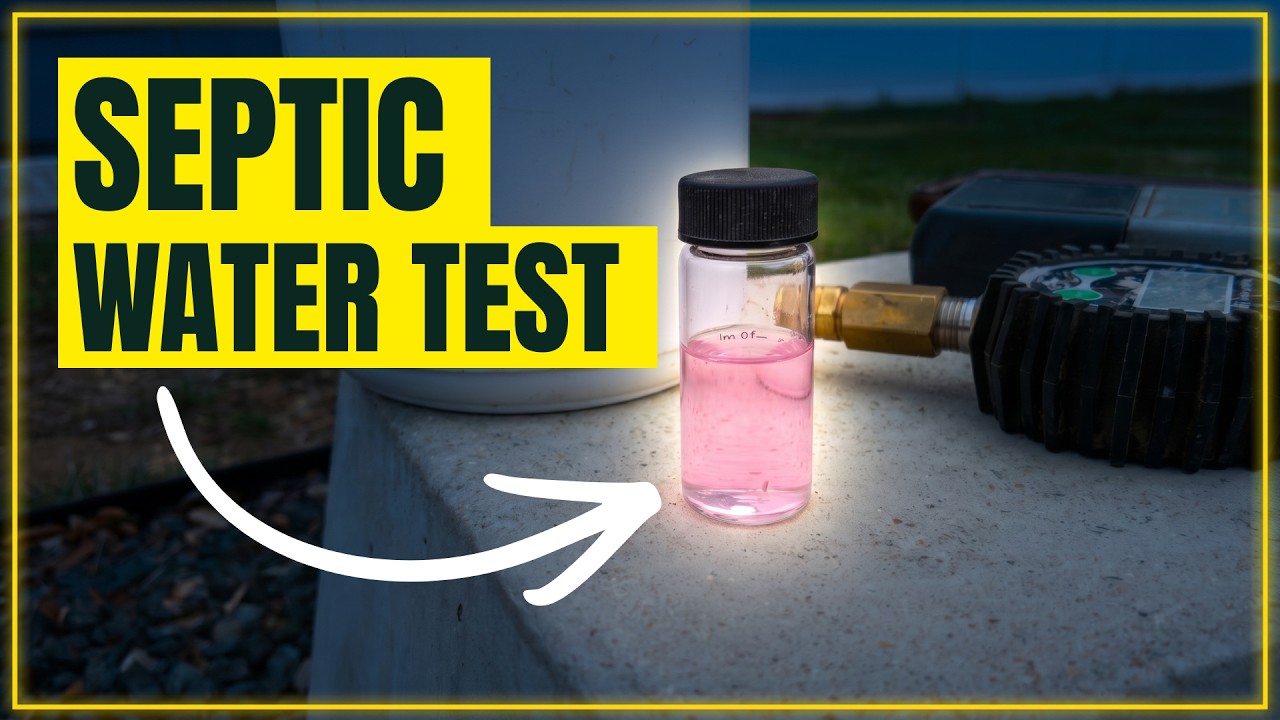
The honest answer is that the right pump-out interval for your home is the one that matches your home, not a number off a chart. Check out the video below to see how we measure your system’s solid levels to diagnose the need for a pump out.
Need pricing on a maintenance contract? Call us here
Frequently Asked Questions
What does “aerobic” actually mean in a septic system?
It means air. An aerobic septic system pumps oxygen into one of its chambers so oxygen-loving bacteria can grow and break down the waste. That active oxygen supply is the single thing that separates an aerobic system from a conventional one, which relies on the soil to do the treatment instead.
What’s the difference between an aerobic and a conventional septic system?
A conventional system is essentially a concrete tank where waste collects and then drips into a leach field, letting the soil filter it. An aerobic system actively pumps in air to grow bacteria that treat the water inside the system before it’s released. Newer Central Texas homes are usually aerobic because our rocky, limestone soil isn’t reliable for conventional filtering.
How many tanks or chambers does an aerobic septic system have?
You’re out of compliance the moment it lapses, and the county can fine you — potentially hundreds of dollars per day. This happens most often with non-subscription contracts that homeowners simply forget to renew, which is exactly why we send renewal notices 45 days out.
How do I know if my system sprays water or drips it underground?
If you have sprinkler heads that spray treated water onto your lawn, you have a surface application system — and in Texas that type is required to use chlorine as a final disinfection step. If your system releases water underground through buried pipes into a drip field, you have a drip system, which typically uses a drip disc filter instead of chlorine.
Do aerobic septic systems really need to be pumped out?
Yes. Even though the aerobic process is efficient, some solids never fully break down and slowly build up in the tank. A general rule of thumb is every three to five years, but it genuinely depends on your household’s solid levels and water usage — a heavier-use home needs it sooner. The right interval is the one that fits your specific home.