
Why Is My Septic Alarm Going Off? A Central Texas Homeowner’s Guide To That Red Light
A red light on your septic panel means one thing: the water level in your pump tank is too high. Stop running water in the house right now. Then let’s work out which of the things we actually find is causing it.
Quick Summary
- A red light means high water in the pump tank. Water is going in faster than it’s coming out.
- Stop using water immediately. No laundry, no dishwasher, no showers, no flushing if you can help it.
- Silence it by flipping the HWA switch on your panel down to the middle. That kills the noise, not the problem.
- The usual causes fall into four groups: too much water at once, weather, something mechanical, or a system that’s overdue.
- It’s not an emergency for you. It is urgent for us, because you can’t use the system until someone works out why.
On This Page
- What do I do when my septic alarm goes off?
- What does a septic system red light actually mean?
- 4 most common reasons your red septic alarm goes off
- What actually happens when a technician arrives
- When will the alarm light turn off?
- Is this an emergency?
- How to stop a red septic light from happening again
- Why your system’s history matters more than you’d think
- Frequently asked questions
- TL;DR
What do I do when my septic alarm goes off?
First, stop putting water into the system. No laundry, no dishwasher, no showers, no flushing if you can avoid it. Every drop you add can make the problem slightly worse, and stopping is the one thing you can do right now that actually helps.
Second, silence the alarm. On the side of most control panels you’ll find two switches. The top one is marked HWA, for high water alarm, and that’s the one controlling your red light. Below it is COMP, the air compressor alarm, which runs the yellow light instead. (Yellow light on? That’s a different problem entirely.)
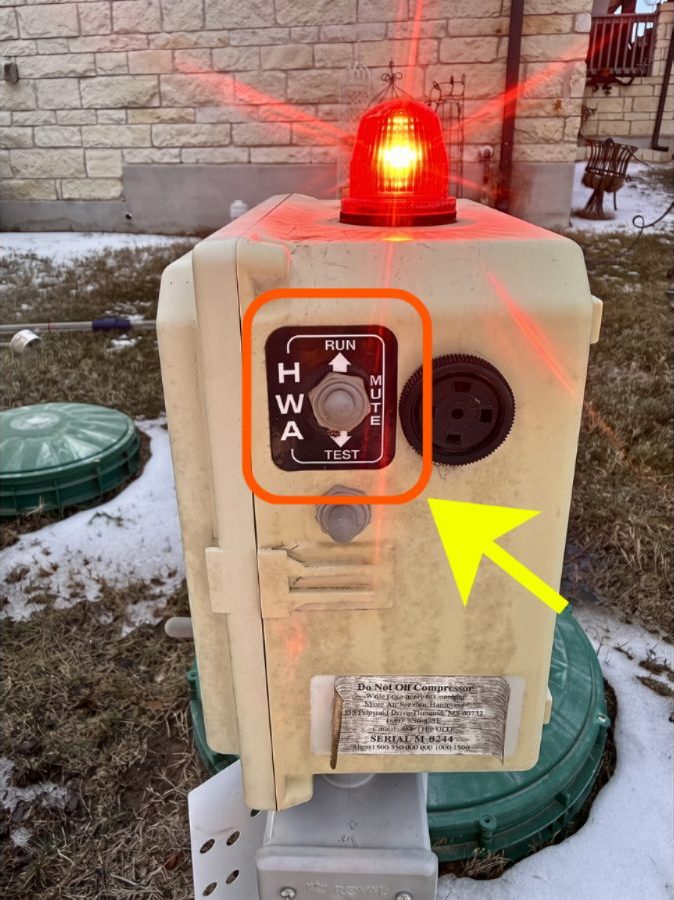
When the alarm is sounding, that switch is sitting in the upright position. Flip it down to the middle. The noise stops and your neighbours stop wondering what’s going on at your house.
Here’s the big caveat, though. That switch does nothing except stop the alarm noise. The water in your pump tank is still too high, and it’ll stay that way until someone troubleshoots the problem.
What does a septic system red light actually mean?
The red light is your aerobic system telling you the pump tank, the last chamber before the water gets sent out to your yard, has filled up more than it is supposed to.
That’s the entire message. Water is going in faster than it’s coming out. What we don’t know yet is WHY?
Often your tank is not technically COMPLETELY FULL…
The alarm triggers before the tank is completely full. There’s reserve capacity built in. But that reserve isn’t there so you can keep going a little longer. It’s there so a technician can get into the tank and see what’s happening. Use it up and you’ve taken away the working room of the person you’re about to call. We can still fix the problem, but if the tank is completely full, we’re dealing with an OVERFLOW, and things get messy.
4 most common reasons your red septic alarm goes off
I asked our technicians what they find most often when they roll up to a red light. These are what we see most often day to day on Central Texas systems, not an exhaustive list. These systems have a lot of moving parts.
Hydro-Overloading: Using too much water too quickly
This is one of the most common causes of red lights, and it’s also one of the most fixable. Our fancy word for it is hydro overloading, which is a way of saying you put more water into the system than it could process.
I noticed our technicians’ schedules were jammed with red light calls every Monday, so I asked one of them why. His answer was simple: here in Central Texas, a lot of homeowners save their laundry and household chores for Sunday. Back-to-back loads all day, and the system never gets a chance to move that water through, treat it, and pump it out. Monday morning, the red light’s on.
House parties do exactly the same thing. Guests all weekend, everyone showering, the disposal running, and at some point that night the alarm goes off. Our tech shows up the next morning and the homeowner says *”well, we did have a lot of people over.”* Every time.
Most of the time, the fix is just waiting. Stop putting water in, give it a few hours, let the system catch up. Then space things out from there: two hours between laundry loads rather than back to back.
Weather
The other pattern in our schedule: red lights after heavy rain. And in Central Texas that comes down to our soil, which isn’t the most absorbent stuff in the world.
Two separate things go wrong when it rains hard.
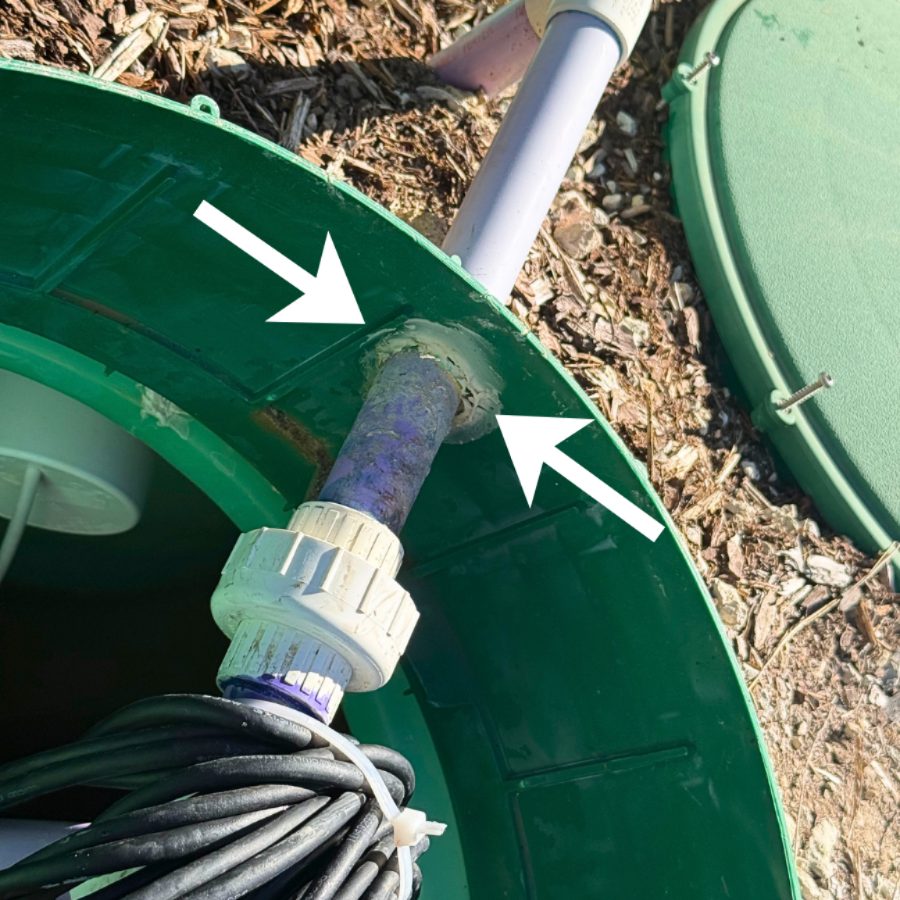
Rainwater gets into the tank. If there’s any way in, it will find it. The most common culprit is a riser lid, the access lid at ground level, that isn’t sealed properly. We find gaps around the PVC where the pump line comes out of the pump tank, and when it rains you’re filling that tank with rainwater rather than anything from your house (check out the photo below).
Water logging your drain field is another big cause of red lights. Your drain field is the part of the yard where treated waste water is dripped out underground. Soak that ground with rain and it stops absorbing. The drain field can get soaked from lots of rain, gutters that are pointed to the field, yard grading that naturally pushes water onto the field, and more. If that drain field becomes water logged, it is unable to take on any more water from your septic system. As the pump tries to push treated waste water out through the lines, less water is able to be pushed out, and the water levels rise in your pump tank.
The good news is that the first one is usually cheap. An unsealed lid is a small fix. Regrading a yard is not, but you’d be surprised how often it’s just the lid.
Something mechanical
If it’s not you and it’s not the weather, it could be one of the PARTS in your system:
- A clogged filter. Many systems have one as the last stage before the water goes out to the drain field. Clog it and it becomes the constraint. The pump can’t push water through fast enough, so the tank fills.
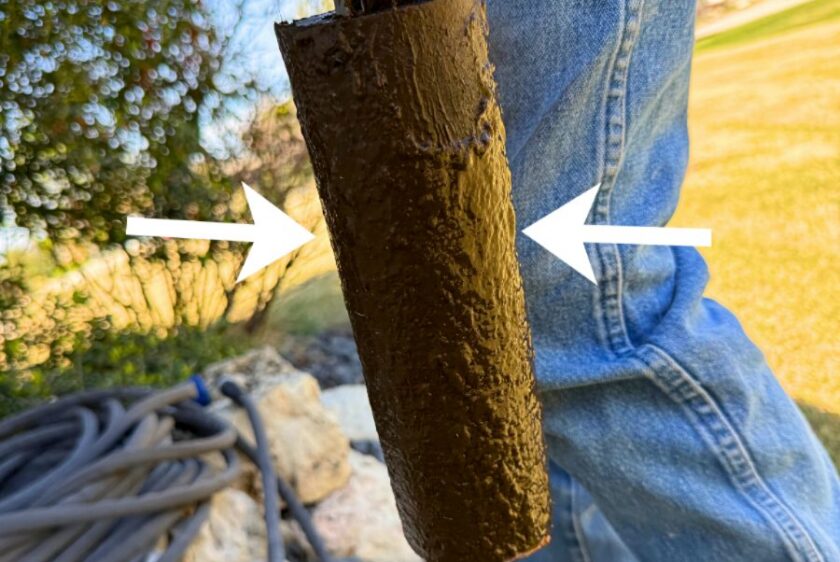
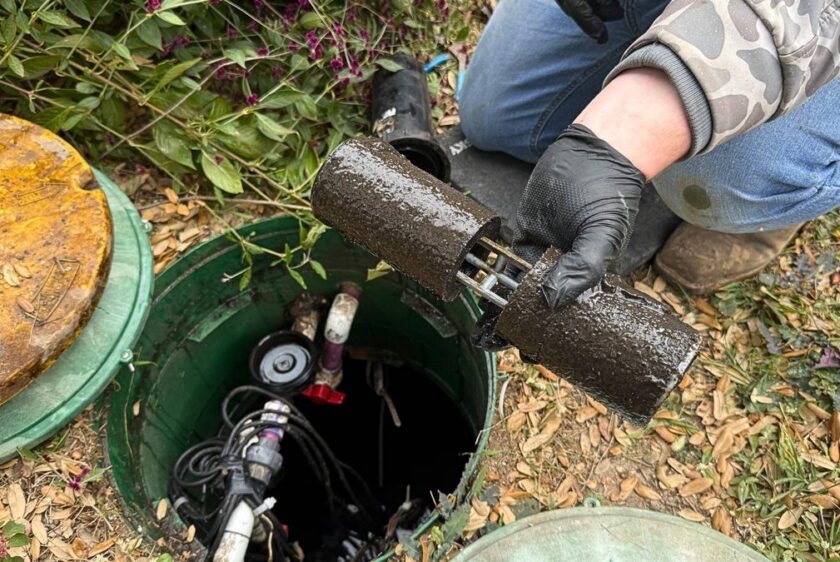
- A broken float. Floats are small buoys inside the pump tank that rise and fall with the water. One of them switches the pump on; another sets off your alarm. If the wrong one fails, the pump never gets told to run.
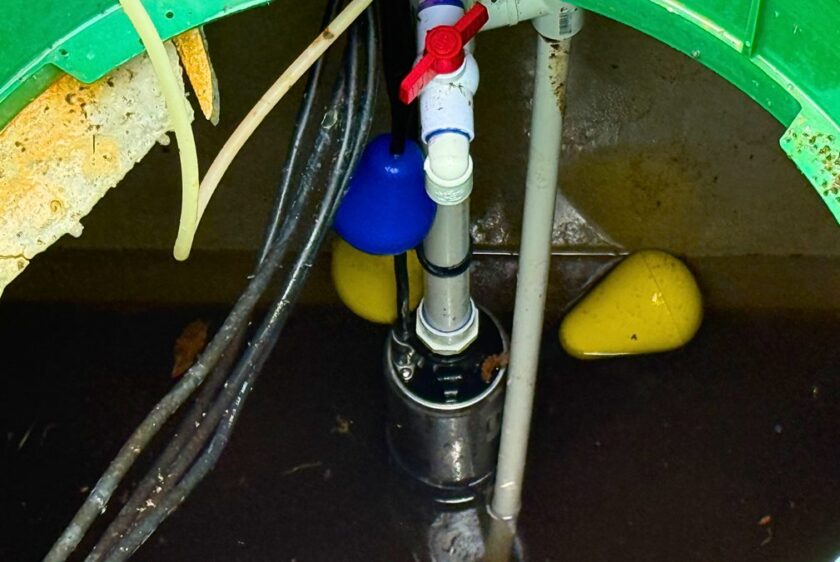
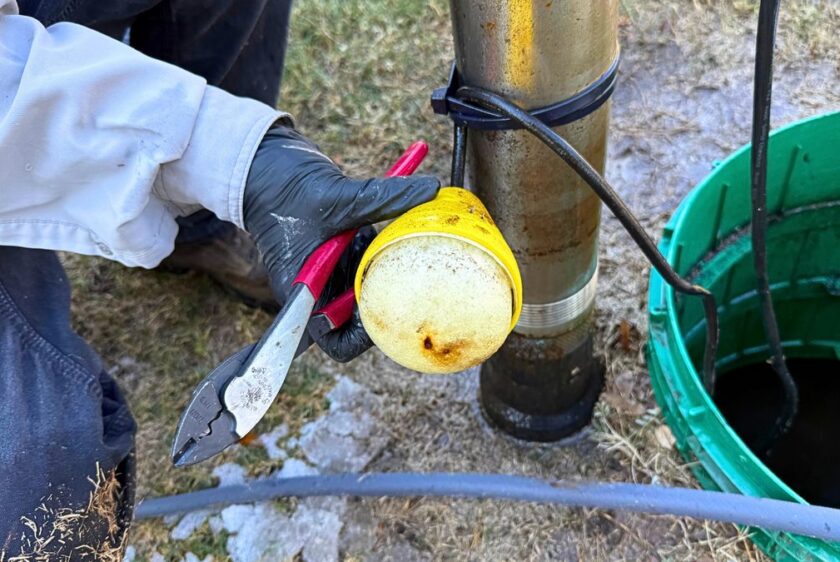
- A pump that isn’t running. Sometimes the pump is out and just has to be replaced. This is like your HVAC… eventually everyone has to do it.
- A clogged pump intake screen. This one’s sneaky. The pump is on, you can hear it running, and it still isn’t moving water, because the mesh screen on its underside is packed solid.

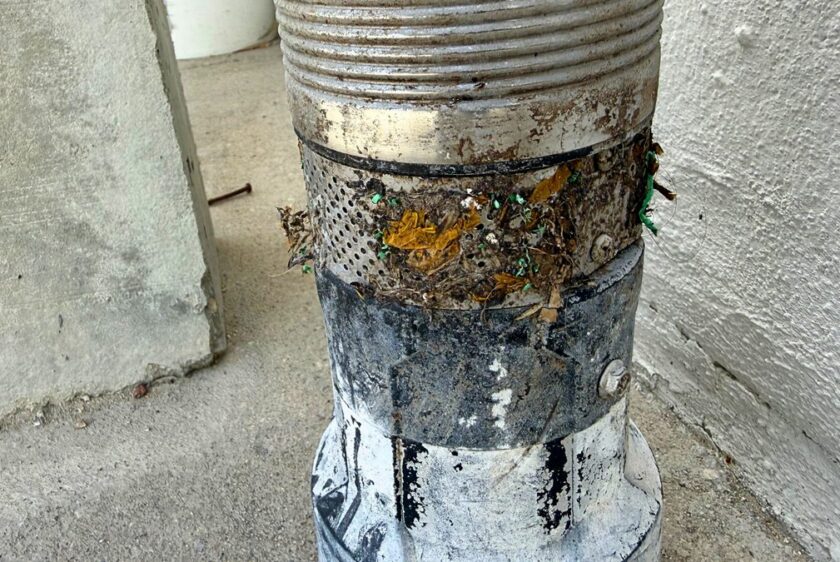
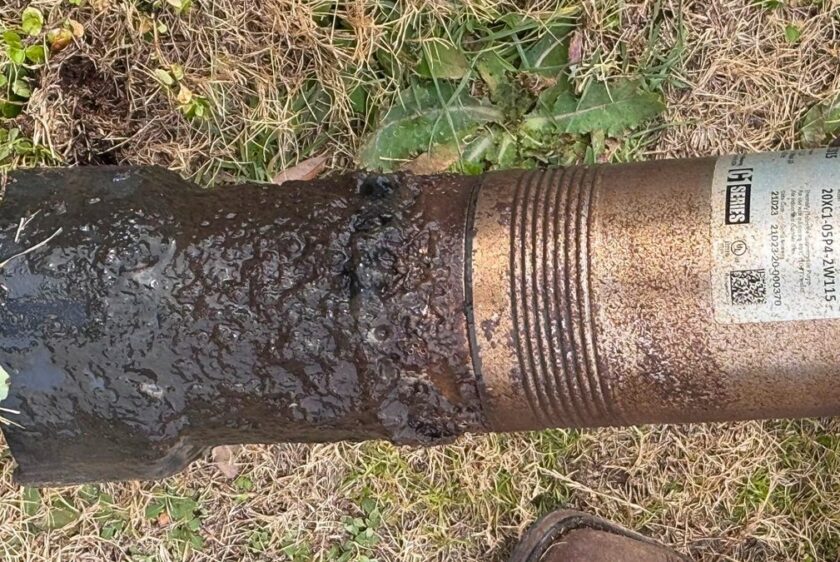
A system that needs a pump out!
Solids will build up in your aerobic septic system over time, and eventually there’s enough of it that the system can’t do its job properly.
You’ll read everywhere online that you should pump every three to five years. WE DO NOT TREAT THAT AS A RULE. The honest answer is that it depends on the solids actually in your tank, which depends far more on how many people live in your house, what goes down the drain, diet, medicines being used, and more… not necessarily how many years have passed. That’s exactly why we measure it on every inspection rather than working off a calendar, and it’s the cheapest thing you’ll ever do to this system.
What actually happens when a technician arrives
This is the part almost nobody shows you, so here’s the real sequence from a red light call I went out on. Check out this video:
First, confirm the high water is real. We unscrew the pump tank lid and look. It sounds obvious, but a miswired component can set off an alarm with nothing actually wrong, and you don’t want to start pulling equipment apart chasing a false alarm. On this call the water was genuinely high.
Then the filter. This system had a drip disc filter, and it was filthy: extremely clogged. That alone explained the problem: the pump was pulling water and trying to push it through a filter that had stopped letting anything past. We cleaned it, put it back, switched the pump on, and stood there long enough to confirm the water was actually going down.
If the filter’s clean, the pump is next. Does it switch on? Can we hear it and see it running?
Then the floats. Are they intact, do they move freely, is the right one triggering?
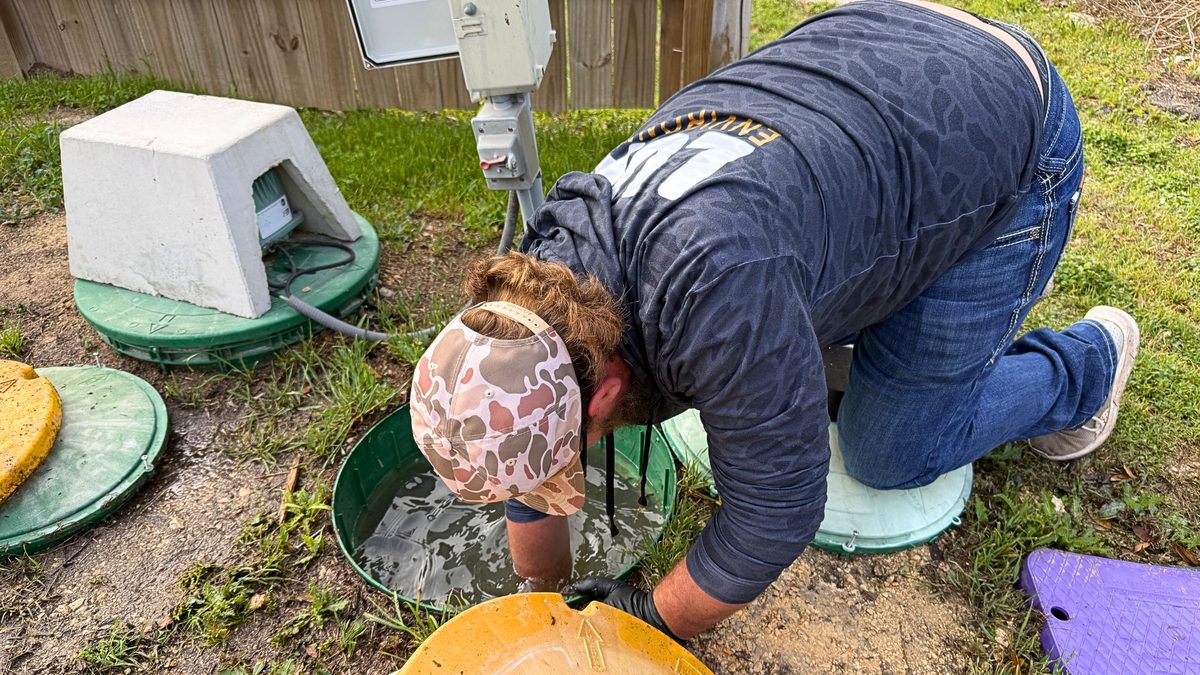
And if all of that checks out, the pump comes out of the tank. On another call that’s exactly what we had to do, and the screen on the bottom of the pump was so clogged that the pump was running perfectly while moving almost nothing. That is a great example of something that is impossible to diagnose without a technician pulling the pump in real time.
I’ll be honest about what that last step involves: our technician was up to his elbow in a tank full of waste water to get that pump out. It’s a genuinely nasty job, and it’s most of the reason we tell homeowners not to attempt this themselves.
When will the alarm light turn off?
Not instantly, and that’s normal.
Once the problem is fixed, we don’t leave until we’ve watched the water level actually drop. On that call I took photos over about 25 minutes, and you can watch the float that had been sitting high in the tank become more and more visible as the level came down.
How fast depends on what kind of system you have. A spray system with sprinkler heads can discharge a lot of water at once, so the tank comes down relatively quickly. A drip system pushes water out through small underground emitters instead, which is slower by design, so give it longer before you start worrying that nothing’s happening.
Is this an emergency?
You should treat it like one until you know otherwise.
You don’t need to panic, and you don’t need to call anybody at midnight. Your system is probably in decent shape, and the alarm did its job by warning you before anything overflowed.
But you genuinely can’t use the system until it’s diagnosed, and that’s the part people underestimate. The cause could be a clogged filter, a dead float, a pump screen packed with solids, rainwater coming in through a bad lid, or simply too much laundry, and you cannot tell which one you’ve got by looking at the light. They all produce the same red light. If nobody works out which it is, a small problem has plenty of time to turn into a backup or an overflow in your yard.
So: don’t panic, don’t be a hero, stop the water, and get someone out there.
How to stop a red septic light from happening again
Space out your water use. If you’re saving laundry for Sunday, spread it across the week instead, or at least leave a couple of hours between loads. Same for the days you’ve got a house full of people.
Check what happens at your place when it rains. Are your riser lids properly sealed? Are your gutters pointed at your tanks or your drain field? Does your yard slope so that everything drains toward the system? The lid is a cheap fix and worth looking at first.
Get the solids measured. It’s the single best predictor of when you need a pump out, and we do it on every single maintenance inspection.
And stay on a maintenance schedule. Aerobic systems in Texas have to be inspected three times a year, every four months, under 30 TAC Chapter 285, which is why most homeowners here hold a maintenance contract in the first place. (We’ve explained how that law actually works separately, because it confuses a lot of people.)
Why your system’s history matters more than you’d think
Here’s something I didn’t appreciate until I saw our technicians work.
When we go out to a red light for a customer we’ve been maintaining, we’re not starting from scratch. We can pull up every visit we’ve ever made to that system: how many alarms they’ve had, what caused each one, what was replaced and when. So instead of diagnosing from zero, we’re asking *”is this the same thing as last March?”* Quite often it is.
That history is also how problems get caught before the alarm ever sounds. A filter that’s been dirty at the last two inspections is a filter we clean on the third visit rather than at 9pm on a Sunday.
Your septic system is a big black box buried in your yard that you never think about until it demands attention. The value of a maintenance record isn’t really the paperwork. It’s that somebody is paying attention to your system on your behalf during the years when nothing appears to be happening. It’s also illegal in most counties not to be on a maintenance contract.
Frequently asked questions
Why did my septic alarm go off?
A red septic alarm means the water level in your pump tank is too high. The usual causes are too much water use at once, rainwater getting into the system, a mechanical failure like a clogged filter, a broken float or a clogged pump intake screen, or sludge buildup in a tank that’s overdue for service. You can’t tell which from the light alone, so stop using water and get it diagnosed.
Why did my septic alarm go off after rain?
Heavy rain trips septic alarms in two ways: rainwater finds its way into the tank through an unsealed riser lid or a yard that drains toward the system, or the drain field gets waterlogged and stops absorbing, so the pump can’t push water out. Either way the tank fills faster than it empties and the high water alarm goes off. If rain alone reliably sets off your alarm, something needs sealing or grading, and it will keep happening until that’s fixed.
Is a red septic alarm an emergency?
Not the 911 kind, but it is urgent. You can’t keep using water until the cause is found, and every cause produces the same red light. Stop running water, mute the alarm, and get a technician out. Left alone, a small problem has plenty of time to turn into a backup or an overflow in your yard.
How do I silence my septic alarm?
On the side of most control panels there’s a switch marked HWA, for high water alarm. When the alarm is sounding it sits in the up position; flip it down to the middle and the sound stops. That only mutes the noise. The water level is still high, so treat the quiet as room to think, not a fix.
What is an aerobic septic system alarm?
It’s the warning system built into your aerobic system’s control panel. A red light is the high water alarm: the pump tank has filled beyond its designed level. A yellow light is the air compressor alarm, a separate fault with its own causes. Both are designed to trigger before outright failure, so there’s time to get the problem diagnosed.
TL;DR
Red light means the pump tank has too much water in it. Stop using water in the house, flip the HWA switch down to the middle to kill the noise, and call someone. It’s usually one of four things: too much water at once, rain getting in or waterlogging the drain field, a mechanical part like a filter or float or pump screen, or a system that’s overdue for attention. You can’t tell which from the light, and the fix is different for each one. Don’t panic, don’t be a hero, and don’t keep running the dishwasher.