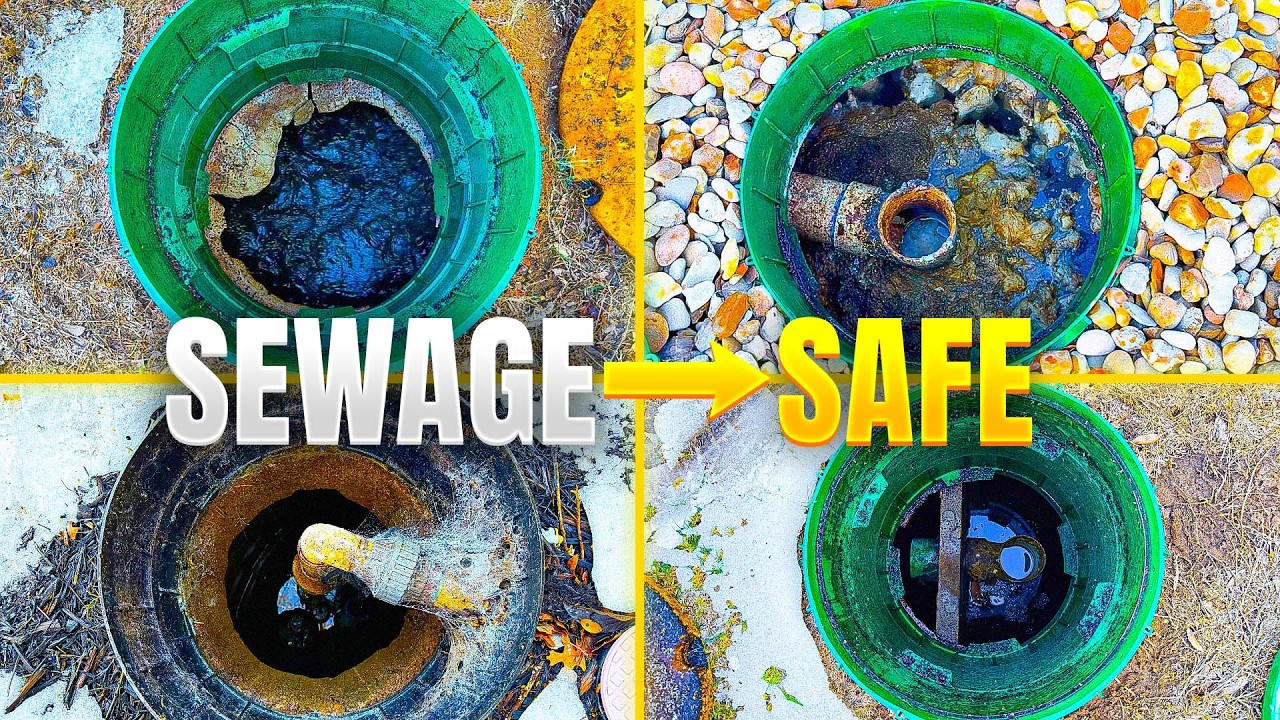

Why Does My Septic Tank Smell? (And How You Can Fix It)
If you’re smelling sewage in your yard around your aerobic septic system, it’s almost always one of two things: Waste water coming up from the ground, OR a broken air compressor/aerator. One of these is way more common than homeowners realize. I went on location with a Luna technician to break down exactly how to diagnose it.
Quick Summary
- Septic smells in your yard usually come down to two things: surfacing effluent (wastewater coming up from the ground where it shouldn’t) or a broken aerator/air compressor.
- If your aerator is out, the wastewater never gets properly treated — and if that untreated water is being sprayed through your sprinkler system, your whole yard ends up smelling like a septic tank.
- The fastest way to diagnose it as a homeowner is to walk outside and listen for the air compressor. No buzz? You’ve likely found your problem.
On This Page
The 2 Most Common Causes of Septic Smells in Your Yard
When we get a call about septic smells around the system, our technicians are looking for two things first: surfacing effluent, and a working aerator. Almost every smell complaint we go out on traces back to one of these two issues — or, in some cases, both at the same time. Caveat… there are more reasons you might be smelling septic fumes, but these two are most often at the top of the list during our inspections in Central Texas.

Surfacing Effluent (AKA – Wastewater coming up from the ground where it shouldn’t be)
Surfacing effluent is exactly what it sounds like — treated wastewater that’s somehow making its way to the surface of your yard when it’s supposed to be staying underground. There are a few common reasons this happens:
The drain field is saturated. If we just had a big Central Texas thunderstorm, your drain field soil might already be holding all the water it can. When that happens, the new wastewater your system is dripping out has nowhere to go but up.
Something’s wrong with the distribution line (the underground pipes where the waste water flows out). Maybe the line is broken, and wastewater is pouring out in 1 specific place. Maybe the line was never buried correctly in the first place, and because it’s so close to the ground surface… you’ve got waste water surfacing in your yard. The list goes on…
A broken sprinkler head. If your system uses spray distribution, a damaged head can spray treated water in the wrong direction or in too high a concentration. Sometimes a broken sprinkler head literally dumps waste water on the ground so fast it creates a pool of effluent all around the sprinkler.
If you’re smelling something in your yard, the first thing to do is walk the drain field. Look for pooling water, soggy patches, or anywhere the ground feels unusually wet. If you find it, that might just be the culprit. Then the real work starts… diagnosing WHY the waste water is surfacing in your yard. If you need more info on what an aerobic septic system is in the first place, click here for a detailed breakdown in plain english anyone can understand.
A Broken Aerator (The Bigger Hidden Problem)
This is the one we see most often, and it’s also one that homeowners often catch on their own… why? Because when the aerator/air compressor stops working, you will hear & see that loud yellow alarm light.
(A red light is a different alarm. That one means high water in your pump tank, and we cover it in our red septic alarm guide.)
Your aerobic septic system needs oxygen to work. That oxygen comes from an air compressor (outside the tank) or the aerator (inside the tank), that pumps air into the aeration chamber of your system. That oxygen feeds the aerobic bacteria, and those bacteria are what treat your wastewater before it gets distributed back into your yard. Yes… this is one part of life where we want all the bacteria we can get.
When the aerator stops working, the whole treatment process falls apart. No oxygen means no aerobic bacteria. No bacteria means your wastewater isn’t being treated. And if untreated wastewater is being pumped through your sprinklers and sprayed across your lawn, your yard is going to smell exactly like raw sewage.
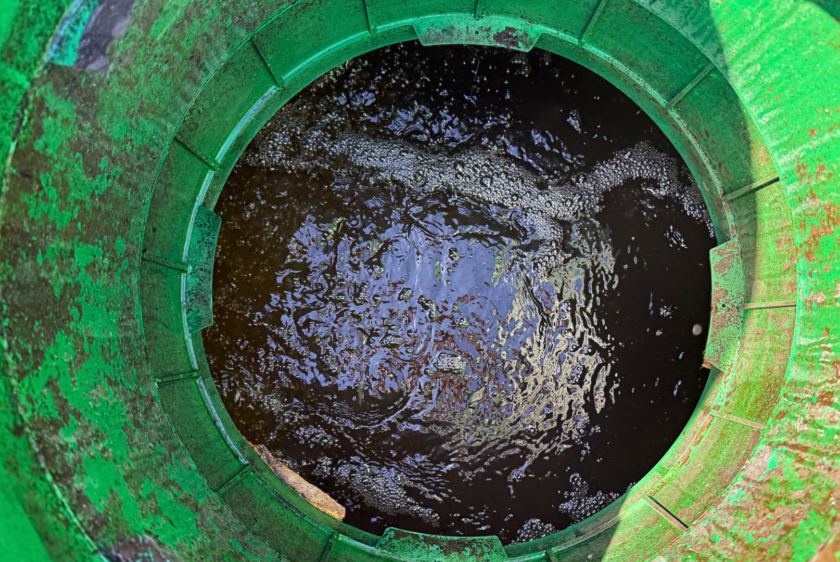
That’s the situation we walked into at the homeowner’s place we featured in this video. As soon as we pulled up, we couldn’t hear the air compressor running. When we opened the aeration chamber, there was no movement in the water, no bubbles — nothing. And when we opened the pump tank that feeds the sprinklers, the smell hit us hard. That same nasty water was being thrown all over the yard every time the system ran.
How to Diagnose Septic Smells as a Homeowner
The single fastest check you can do is walk outside and listen for your air compressor.
A working aerator makes a soft, steady buzzing sound — something like a small electric motor running constantly. If you walk up to your septic system and hear nothing, your aerator is probably the problem.
Pro Tip
Just because you CAN hear the aerator/compressor doesn’t always mean it’s working correctly. Compressors & aerators can run while still failing to push enough oxygen into the chamber. The only way to know for sure is to unscrew the riser lid and look inside the aeration chamber — you should see active movement and bubbling water. Most homeowners don’t want to open their own tank, and we don’t blame them. That’s what we’re here for.
If you don’t hear the aerator, or if you’ve walked the drain field and found surfacing water, the next step is to call a professional. Septic smells can point to several different upstream issues, and the only way to properly diagnose the root cause is to have someone who knows the system open it up and look.
It’s also important to note… most counties in Central Texas operate on what they call a “complaint based system.” That’s a fancy way of saying: “If your neighbors smell septic fumes coming from your yard, we encourage them to call our office and complain. Then we will force you to fix the problem.” Fixing it sooner rather than later is a gift to everyone, including you.
Is Septic Smell Dangerous?
A septic smell in your yard isn’t dangerous to your health — but it absolutely indicates something is wrong with your system, and that is a problem worth taking seriously.
Here’s why: if your aerator/compressor is out, your aerobic system is starting to function like a conventional septic system. The longer that goes on, the more your tank’s biology breaks down. What starts as a smell complaint can turn into a full system failure if it isn’t fixed in a reasonable timeframe.
In Central Texas, where so many homes run aerobic septic systems, we see this exact progression all the time. The homeowner notices a smell, ignores it for a few weeks because they don’t realize how serious it is, and by the time they call us, the system needs more than just an aerator replacement. It is almost ALWAYS cheaper to diagnose and fix the problem as soon as you know it’s there.
What NOT to Do When You Smell Septic in Your Yard
We asked our technician what mistakes homeowners most commonly make when they smell something off, and the answer came back instantly: don’t dump more chlorine into the system.
There’s a common misconception that chlorine’s job is to mask or kill smells. It isn’t. Chlorine is there to provide a final disinfection to your wastewater before it’s distributed into your yard. While chlorine does have a strong smell of its own (which can temporarily mask sewage odor), that’s not what it’s designed to do.
Adding too much chlorine can actually damage other parts of the system and create new problems on top of the one you’re already trying to fix. If you’re smelling septic in your yard, more chlorine isn’t the answer.
When to Call a Professional 👇
If you smell sewage in your yard and you’ve done a quick check for surfacing water and listened for the aerator, that’s the right time to call a septic technician. The reason is simple: septic smells can stem from lots of different upstream issues, and without opening the tank and inspecting the system, it’s almost impossible to know which one is the actual cause.
A good technician will check the aerator, inspect the aeration chamber, look at every single tank, walk your drain field, check your distribution system, verify the control panel is operative, and even take real time solid samples to confirm you’re not in need of a pump out. That kind of full diagnostic is the only way to be sure you’re fixing the right problem the first time.
Frequently Asked Questions
Is it normal for my septic tank to smell sometimes?
A faint smell right next to your tank lids during a service or pump-out is normal. But a noticeable smell in your yard, especially one strong enough to bother you from a distance, is not normal and usually indicates a system problem worth investigating.
How do I know if my aerator is broken?
The simplest test is to walk up to your septic system and listen. A working air compressor makes a soft buzzing sound, and a working aerator is located inside the aeration chamber and can only be heard by opening the lid. Even if you hear nothing, the only way to confirm the compressor or aerator is dead, is to open the aeration chamber and check for movement and bubbles in the water.
Can I fix a septic smell myself?
Some causes are easy to spot — like a broken sprinkler head or obvious surfacing water — but the most common cause (a failed aerator) often requires a professional to diagnose and replace. We don’t recommend opening your aeration chamber yourself unless you’re comfortable with what you’re looking at. Check out this video to see how to rebuild an air compressor yourself.
Will adding chlorine tablets fix the smell?
No, and we strongly recommend against it. Chlorine’s job is to provide final treatment to your wastewater, not to mask odors. Adding extra chlorine can damage your system and create new problems without solving the one causing the smell. If you are confused about chlorine in your system, check out our chlorine guide here to find out which kind to buy, how much to use, and everything homeowners need to know.
How long can I leave a broken aerator before it causes serious damage?
Not long. Once oxygen stops flowing into the aeration chamber, the aerobic bacteria start dying. The longer you wait, the more your system shifts toward anaerobic conditions, which can lead to bigger and more expensive problems. If you suspect your aerator is out, don’t be a hero… Just call us.