

How Aerobic Septic Systems Work, Why They’re Different, and What Homeowners Need to Know

Quick Summary:
Show summary
- Aerobic septic systems use oxygen and bacteria to treat wastewater more efficiently.
- They are common in Central Texas due to soil conditions and lot size restrictions.
- These systems include multiple tanks, pumps, filters, and air compressors.
- Aerobic systems require regular maintenance to prevent alarms and failures.
- Even aerobic systems still need periodic pumping as solids build up over time.
- Routine inspections help avoid emergencies and extend system lifespan.
Article:
What Is an Aerobic Septic System?
As the name suggests, an aerobic septic system is simply a septic tank that introduces oxygen (air) into the waste water breakdown process. Introducing air does 2 primary things:
- As air is pumped into the septic system, it naturally moves the water around. Moving the waste water helps to break down solids naturally.
- Introducing air also attracts oxygen loving bacteria that aid in breaking down the solids in the tank.
So what’s the point of an aerobic septic system? Conventional septic systems require lots of space, really deep soil, flat land, and well draining fields. In Central Texas, this can be hard to come by, so aerobic systems are an extremely effective (and arguably better) alternative.
Aerobic systems use oxygen to speed up the breakdown process, produce cleaner treated water, and require smaller disposal areas. Simply put: Aerobic septic systems are more controlled, and more efficient for the conditions most of us face in central Texas.
Because aerobic systems treat wastewater more thoroughly, they help protect property value by meeting stricter environmental standards. It’s the smarter long-term investment.
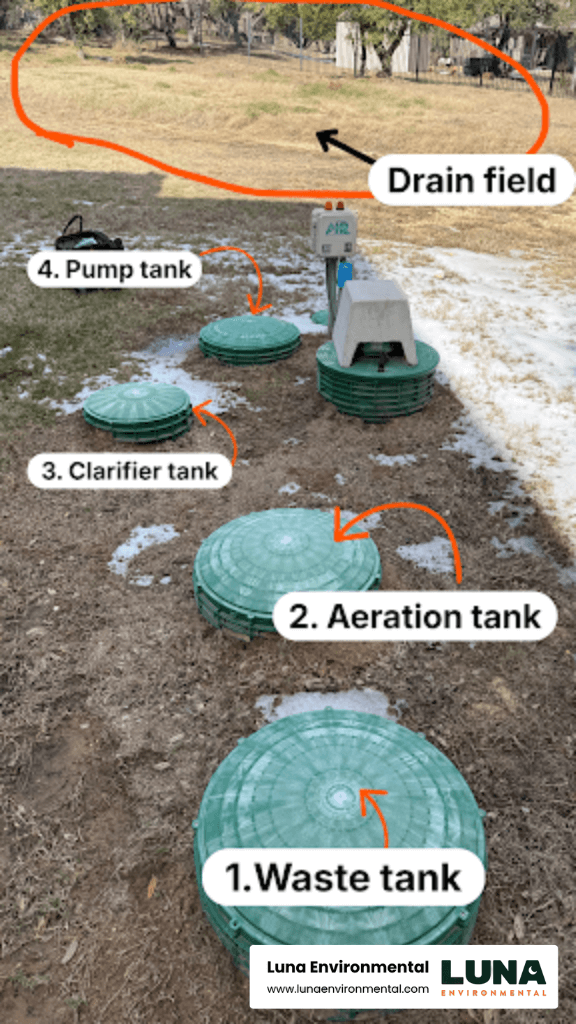
The 4 Main Components of an Aerobic Septic System
1. Waste tank
The waste tank is exactly what it sounds like. This is the first part of an aerobic septic system directly connected to the house. Everything that goes down a drain in the home ends up in the waste tank. This tank naturally has the most solids of the 4 tanks because it is the catch all.
2. Aeration tank
I like to call this the Jacuzzi tank because this is where the air gets pumped into the chamber causing the water to constantly be moving. The idea is simple: Water that moves breaks down solids quicker, and oxygen attracts tiny bacteria that create a whole ecosystem of microbes that eat away at the waste. Nature is disgusting… and efficient.
3. Clarifier tank
This is the settling tank, and it’s one of the most misunderstood parts of the system. After the water has been churned and treated in the aeration tank, it needs time to calm down. The clarifier tank does exactly that. Everything slows way down so gravity can do its thing. Heavier solids sink to the bottom, lighter material separates out, and the cleaner water stays in the middle. The entire job of this tank is to keep solids from moving forward and causing problems later. When this tank fills up with too much sludge, that’s when pumps, filters, and spray components start getting clogged.
4. Pump tank
This is the final stop before the water leaves the system. By the time wastewater reaches the pump tank, it should already be mostly treated and relatively clean. This tank holds the pump, floats, and filters that control when and how the water gets sent out to the spray heads or drip system. Think of it as the delivery system. When everything upstream is working properly, this tank runs quietly in the background. When it’s not, this is usually where alarms start going off and homeowners realize something’s wrong.
How much does an aerobic septic system cost?
The average cost of an aerobic septic system in Texas typically falls between $10,000 and $20,000, with most installations landing closer to $12,500. These systems are generally more expensive than conventional septic systems because they simply do more work and require additional components.
A conventional septic system is kind of like a classic crock pot. There’s not much to it — it’s simple and relies on time to slowly do the job. An aerobic septic system, on the other hand, is more like a Vitamix blender. It’s built with higher-quality parts, works much faster, and is better suited for modern neighborhoods and the pace of life we live today.
**Expert note: Aerobic septic systems are more common in Texas because of:
- Soil conditions
- Smaller lots
- Regulations
- Environmental protection
How aerobic septic systems are different from conventional systems
- Uses oxygen vs. anaerobic breakdown
- Treats wastewater faster and more thoroughly
- Requires electricity and active components
- Needs regular professional maintenance
- Works well on smaller lots and challenging soil
Do aerobic septic systems need maintenance?
The simple answer is YES. Aerobic systems need more maintenance than conventional systems for the same reason they’re slightly more expensive — there’s just more to them. Because these systems rely on pumps, alarms, floats, control panels, air compressors, and filters, there are simply more components that need to be checked and serviced to keep everything working properly.
Here are the most common maintenance issues our Luna technicians see when inspecting customer systems:
- Clogged filters restricting flow
- High water levels that can trigger alarms
- Low or high air compressor pressure affecting treatment
- Broken or stuck floats that disrupt pump cycles
The important thing to understand is that most of these issues don’t happen overnight. They develop slowly and quietly, long before a system fails or an alarm goes off. Regular maintenance allows us to catch these small problems early — before they turn into emergency calls, system downtime, or costly repairs.
That’s why aerobic systems aren’t “set it and forget it.” With routine inspections and proper servicing, they’re extremely reliable. Without it, even a well-installed system can run into problems.
Do aerobic septic systems still need to be pumped?
Yes! No matter how effective a septic system is at breaking down solids, they will still build up over time. That means even an aerobic system requires pumping at certain intervals. Most technicians suggest 3-5 years, but the truth is… Usage matters. When you need to pump your system depends on how much water/solids are being flushed into the tank. While 3-5 years is a general rule of thumb… it is ONLY a rule of thumb. Many of our maintenance contract customers require a pump out sooner than the 3 year mark because of their household usage.
How to maintain an aerobic septic system
- Routine inspections and service
Aerobic systems are like your car. They require regular service to stay in top condition. Think about it… this system collects, treats, and disposes of an entire household’s waste products. It’s going to need a little TLC. If you’re in Texas and need a trusted septic maintenance service, reach out to us here.
- Keep air pumps and compressors running
Aerobic septic systems rely on oxygen to break down and treat waste water. Sometimes our customers will shut off the air compressor when they hear an alarm light. DON’T DO THAT! With the air compressor shut off, this system behaves like a conventional septic system, but it wasn’t designed for that.
- Be careful of your water usage & what goes down the drain
Households that use too much water at one time cause something called “Hydro-overloading.” In simple terms, this means too much water has been flushed into the tank at one time, causing the water level in the first tank to rise, spilling waste water into the second chamber with lots of solids inside. In addition to water usage, be careful sending just anything down the drain! Grease, fats, oils, wipes, and other hard to break down solids are the number 1 reason for clogged filters slowing down the entire system.
When to call a professional
We love DIY homeowners as much as the next guy… but when it comes to your septic system, just don’t. Our new technicians train in person every day for 90 days before we release them into the field. And even then we bring our more experienced techs to check their work. Beyond the complexity of the systems, we’re ultimately dealing with waste water. Without the proper equipment and training, homeowners risk serious health consequences by trying to address problems on their own. It’s just not worth it.
On this Page
- What Is an Aerobic Septic System?
- The 4 Main Components of an Aerobic Septic System
- How much does an aerobic septic system cost?
- How Aerobic Septic Systems Are Different From Conventional Systems
- Do aerobic septic systems need maintenance?
- Do aerobic septic systems still need to be pumped?
- How to maintain an aerobic septic system
- When to call a professional
- Recent Articles